Print Is a Physical Argument
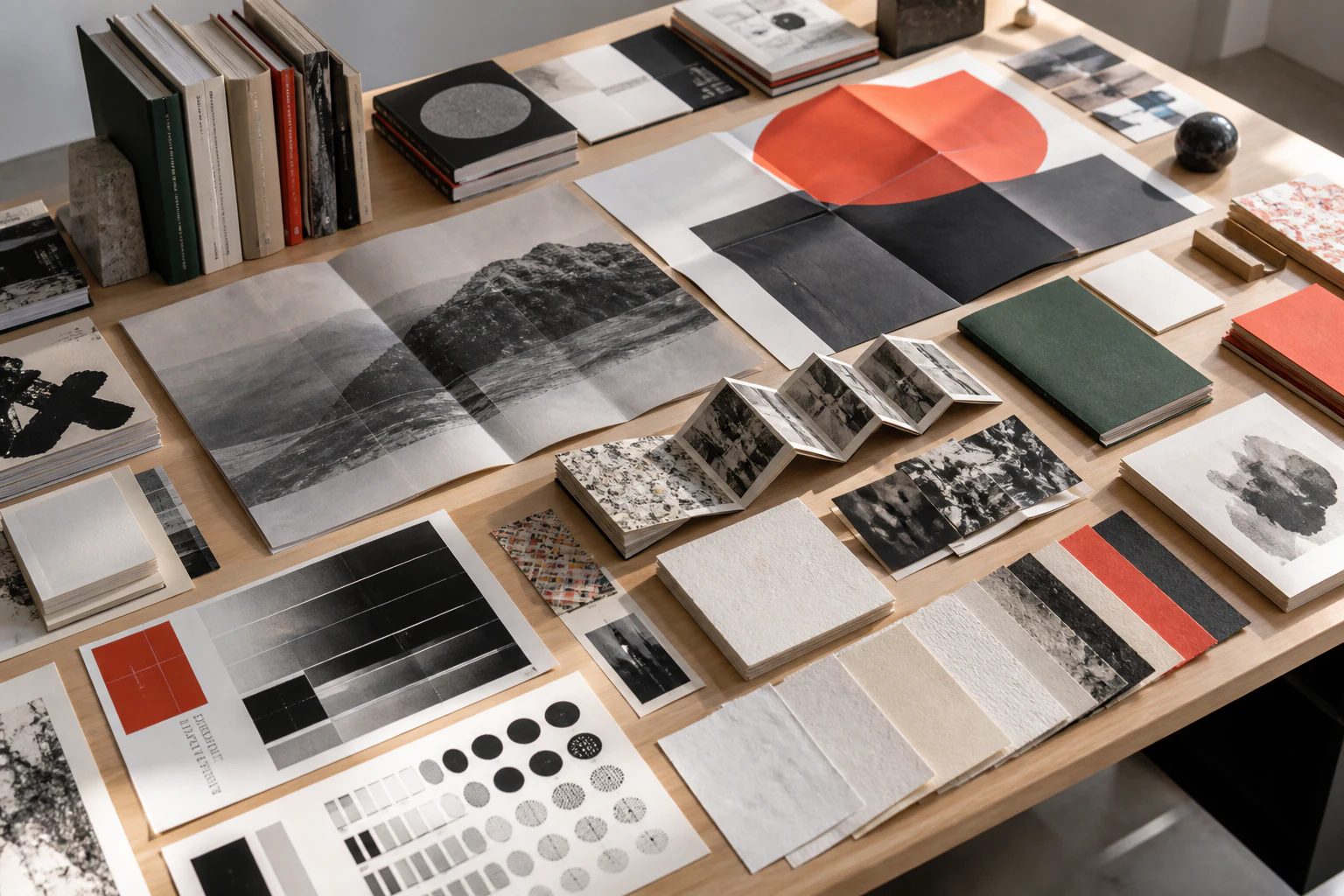
This independent extension gathers books, folded posters, bindings and paper tests onto one editorial specimen table. Rhythm, hierarchy and ink density can be compared through touch and sequence, not just through thumbnails. Print moves more slowly than a screen, which is precisely why every decision has time to become visible.
The Travelling Print Library
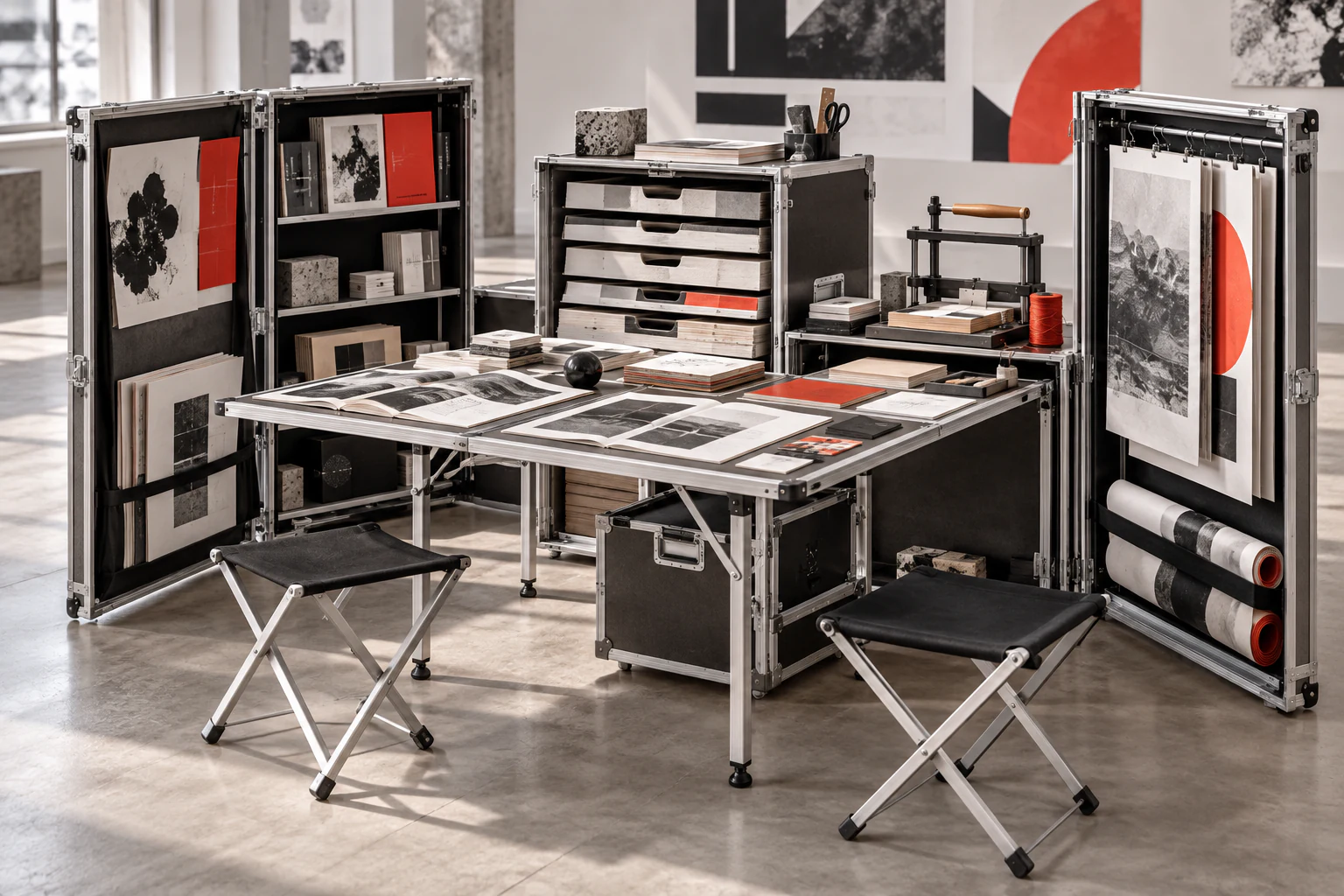
This independent mobile studio packs a print archive, display wall and working press into durable flight cases. The system can arrive at a gallery, school or workshop and unfold into a complete reading and making environment. Black, paper white and one vermilion accent keep attention on texture. Print is presented as a social tool, not a nostalgic object.
Paper Has a Voice
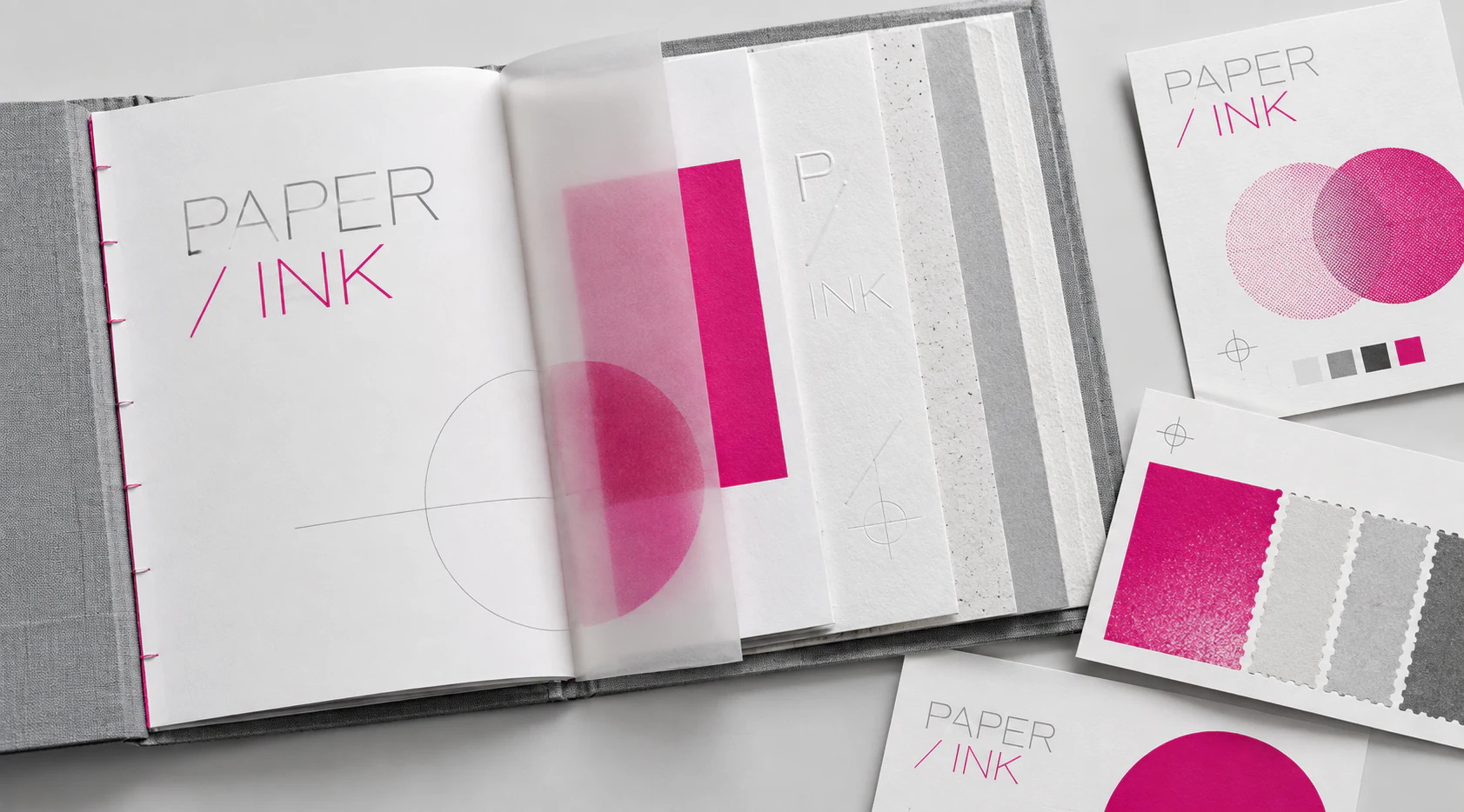
This independent specimen-book study makes production choices available to the fingertips. Stepped stocks reveal thickness before a page is turned; translucent sheets demonstrate overprinting; blind embossing is read through shadow rather than ink. Magenta acts as a controlled reference across different surfaces, making their differences easier to see. The book keeps the original print project’s clean typography and editorial restraint while giving the material a larger speaking part. A screen can describe paper weight quite accurately. It still cannot make you turn the page more slowly. This concept would become a useful studio reference through press trials and annotated physical samples.