Opera Frame: A Buildable Stage Guardian
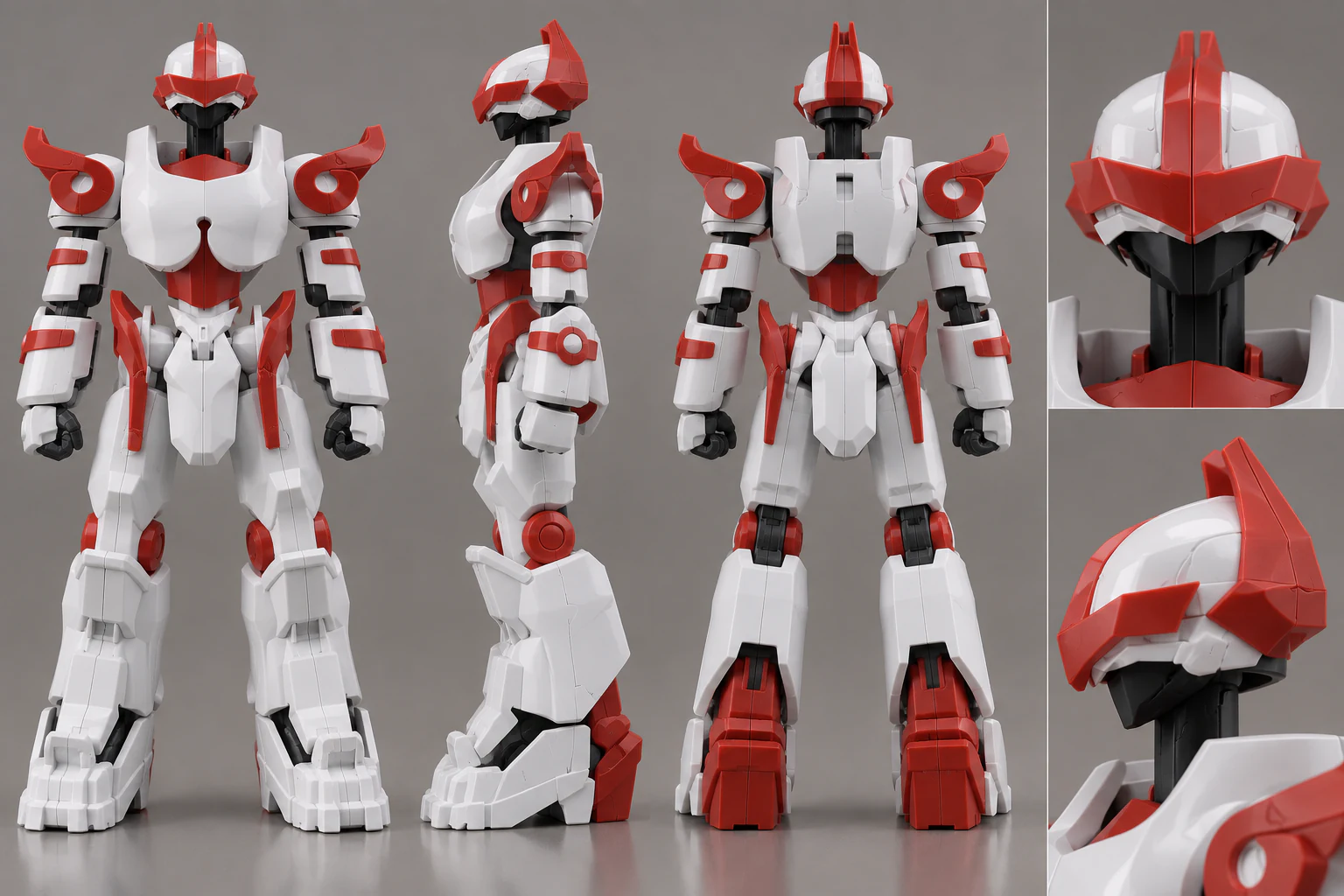
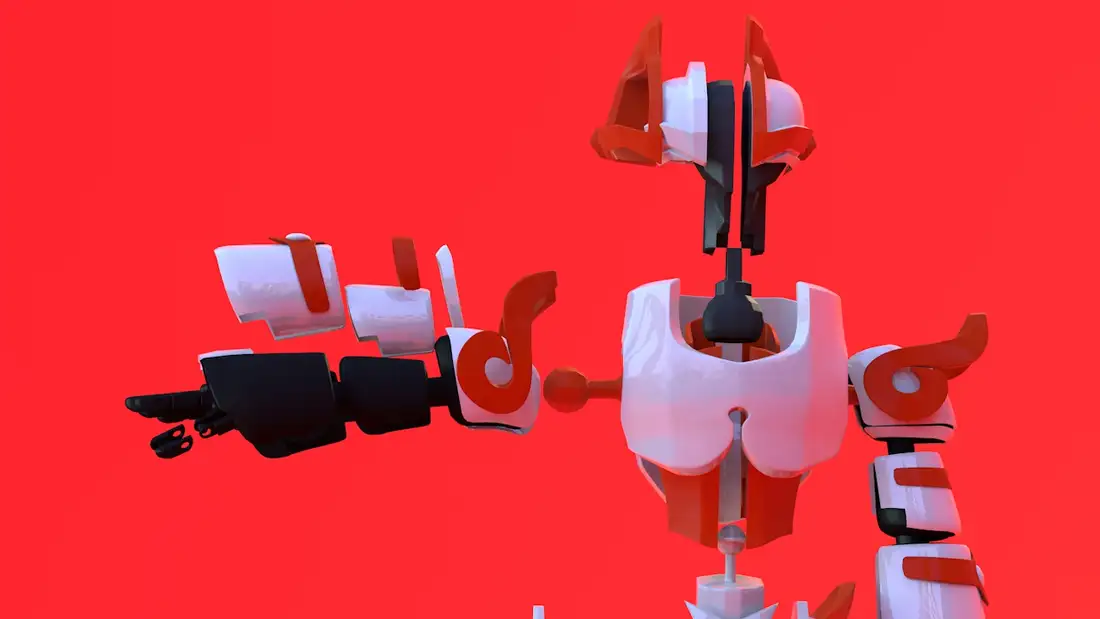
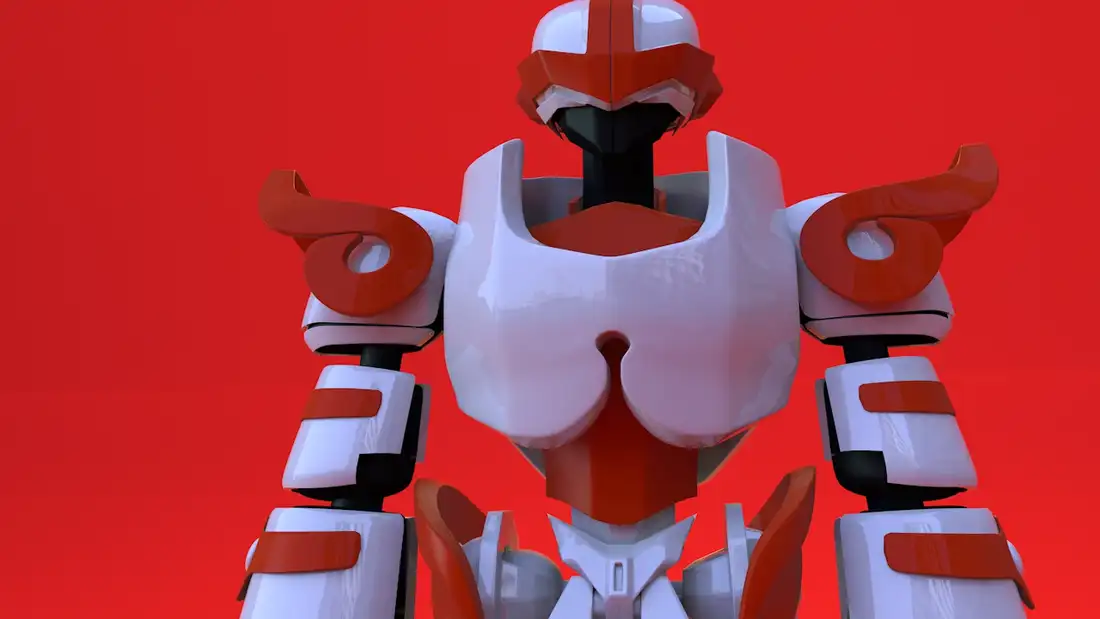
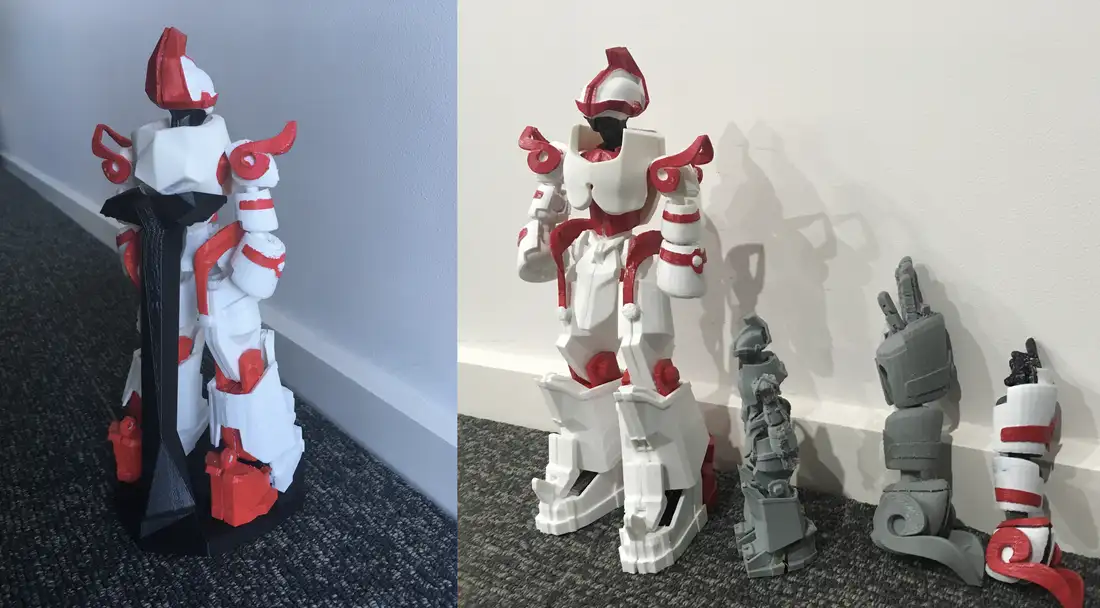
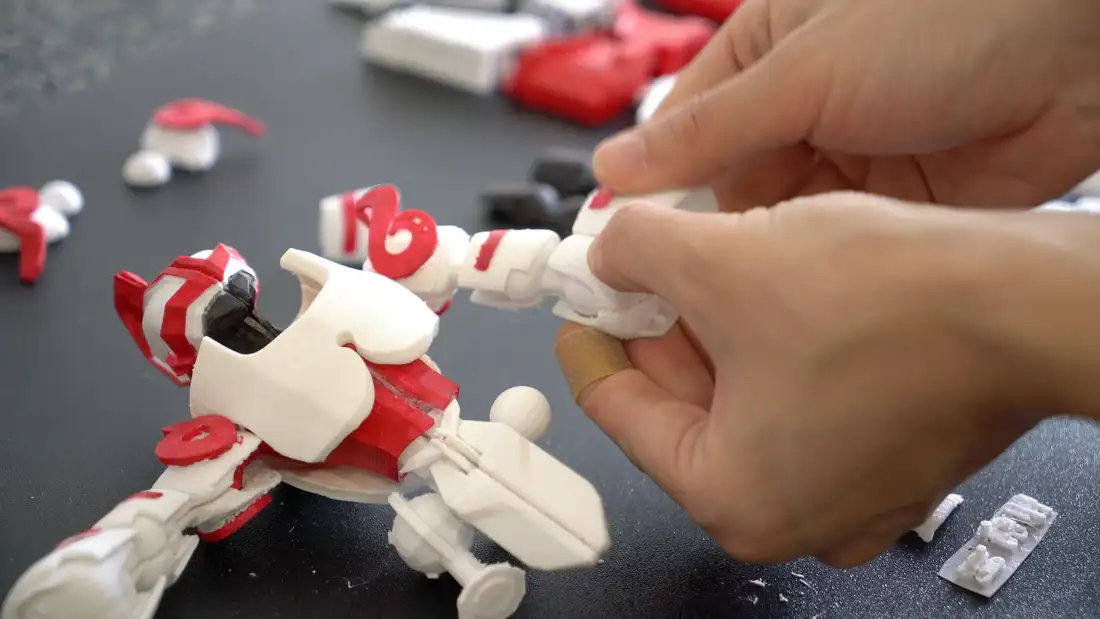
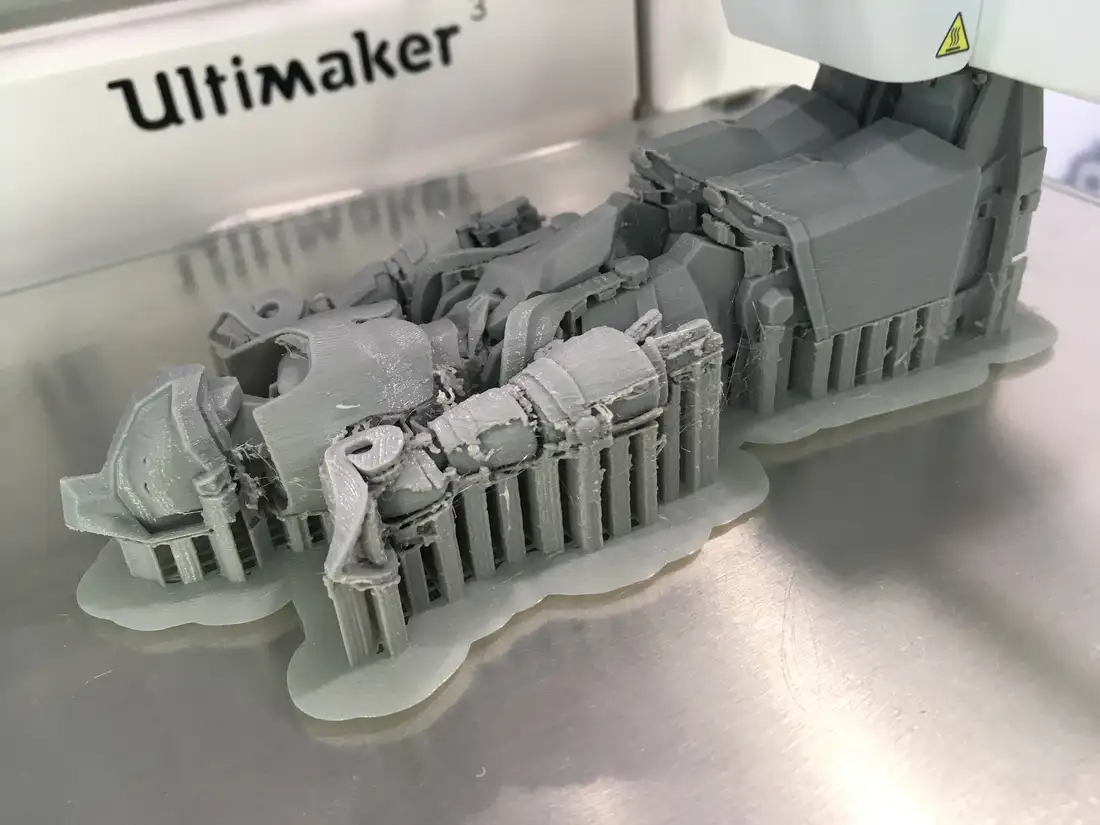
The original Chinese Robot already crossed the difficult line from drawing to physical object: it was modelled, printed, cleaned, assembled and tested by hand. This independent 2026 extension treats that prototype as evidence rather than something to hide. Its opera-mask helmet, split chest plate and cloud-scroll shoulders are refined into a 1/12 model kit with colour-separated parts, readable joints and a stage instead of a battlefield. The toy is not simply wearing Chinese decoration. Its silhouette, gestures, assembly ritual and display environment all belong to the same theatrical idea.
Keep the strange parts
The red shoulder scrolls, long black neck and keyhole-shaped chest gap are the character's memory anchors. Production refinement cleans their surfaces and strengthens their roots without sanding away the eccentricity that made the hand-built prototype worth noticing.
A kit that explains itself
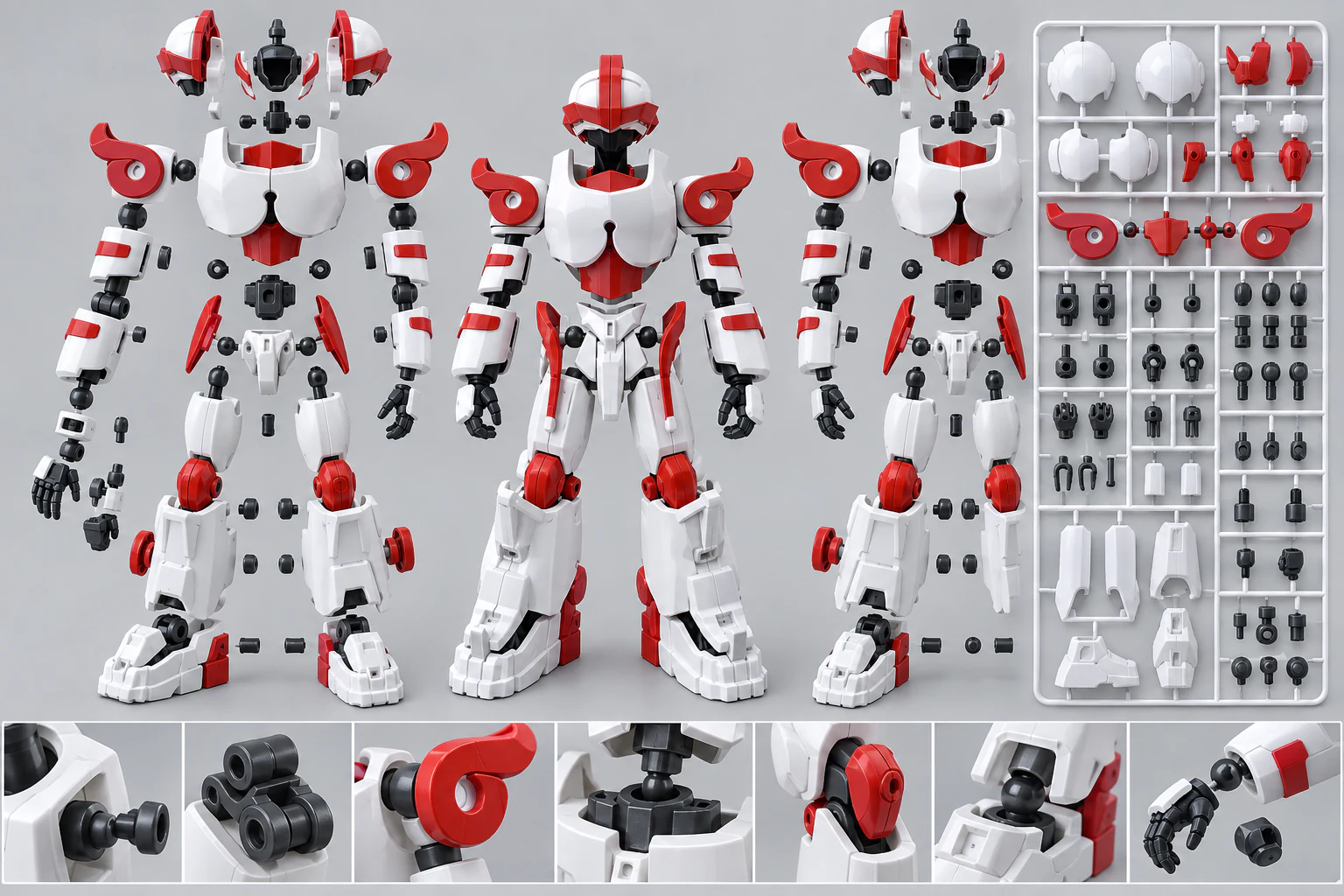
White armour, vermilion accents and charcoal joints are separated by material and sprue, reducing masking and making the build legible before instructions are opened. Keyed pegs prevent mirrored parts being swapped, while standardised polycaps let hands and forearms be replaced without stressing painted shells.
Articulation for performance
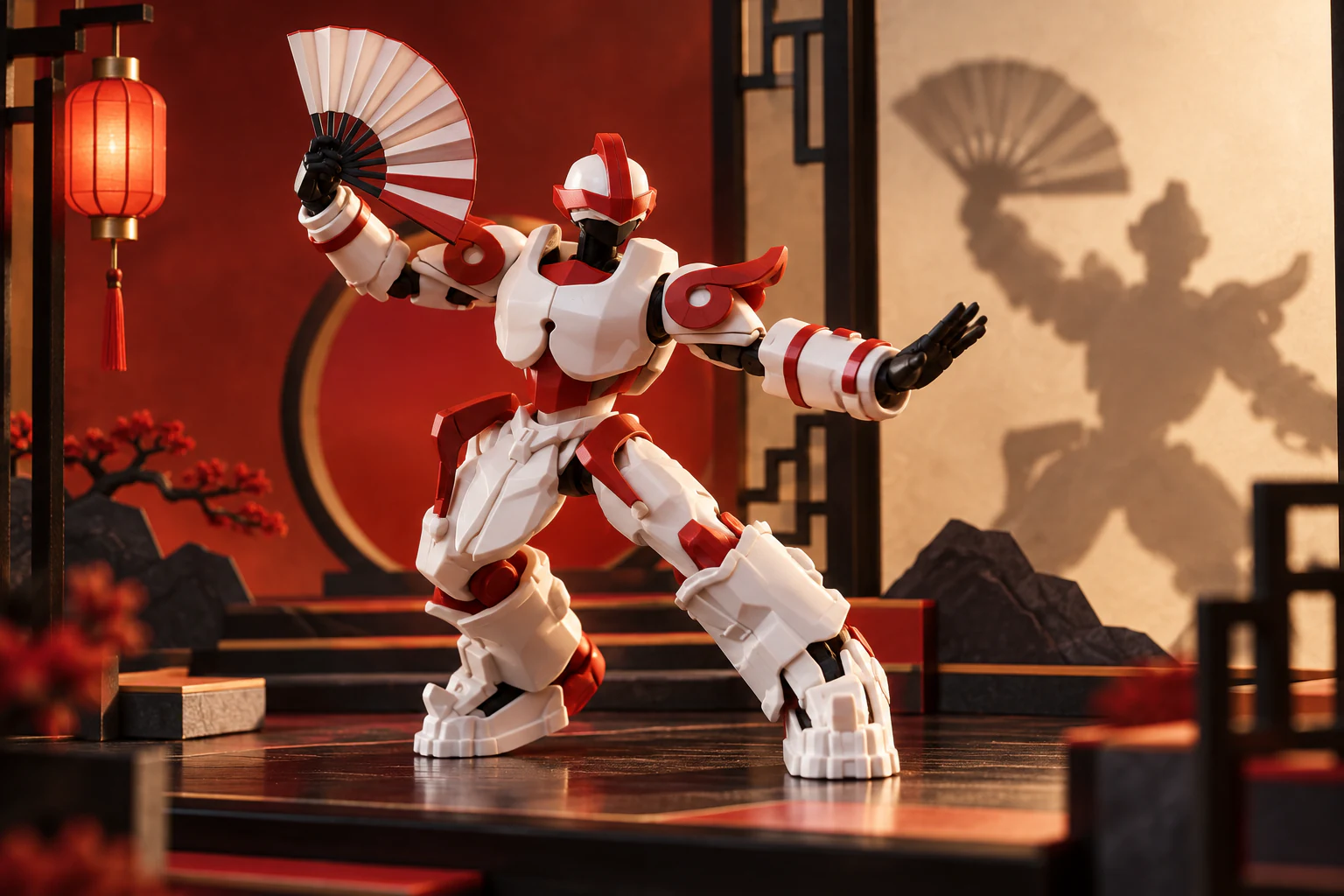
The joint plan prioritises silhouette and gesture: butterfly shoulders clear the chest plates, double elbows bring the fan close to the face, a floating waist preserves the narrow torso, and segmented ankles keep the heavy feet planted through low opera-inspired poses.
Accessories, not an armoury
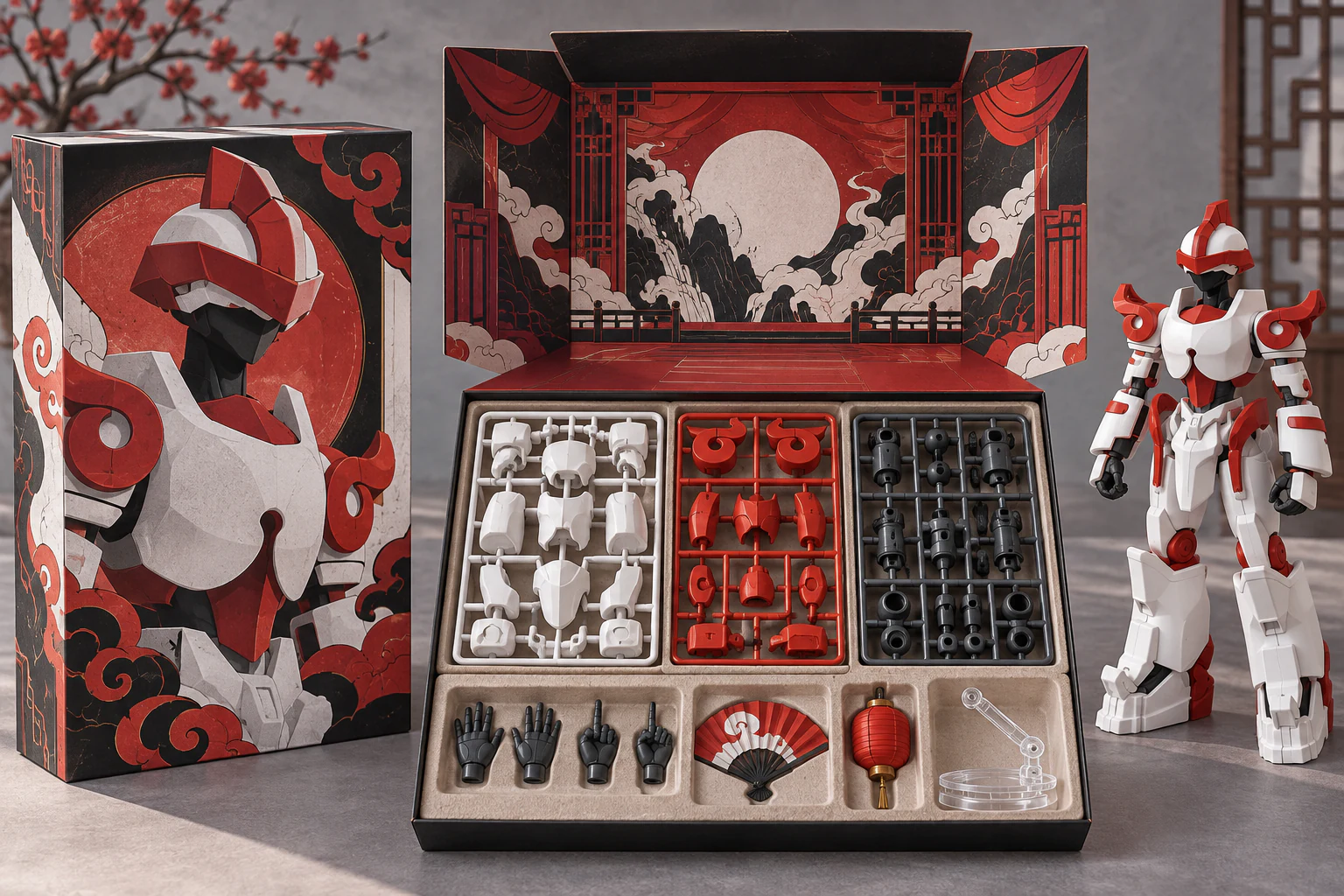
Open hands, pointing hands, a folding fan and a small lantern create a vocabulary of entrances, pauses and invitations. The figure can command a scene without holding a weapon. A clear support arm assists extreme poses but disappears visually when the feet can carry the balance.
The box becomes the theatre
The recycled-board lid unfolds into a compact proscenium with moon-gate, cloud and mountain layers. Sprues sit in a moulded fibre tray below it. After assembly, the packaging remains useful as a photographic set, storage case and display stage rather than becoming a large piece of decorated waste.
A practical first edition
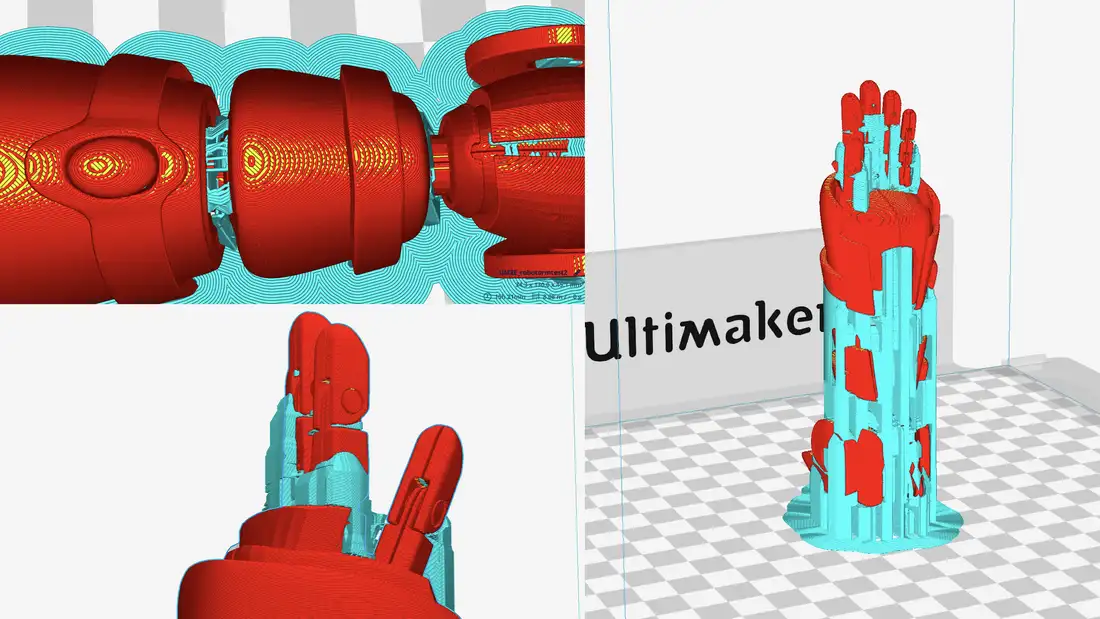
At roughly 250 mm tall, the figure is large enough for robust 4 mm joint hardware and expressive hands, but still fits a standard shelf. A first run could retain 3D-printed resin for the helmet and shoulder ornaments while moving repeated structural parts to injection-moulded ABS and POM.