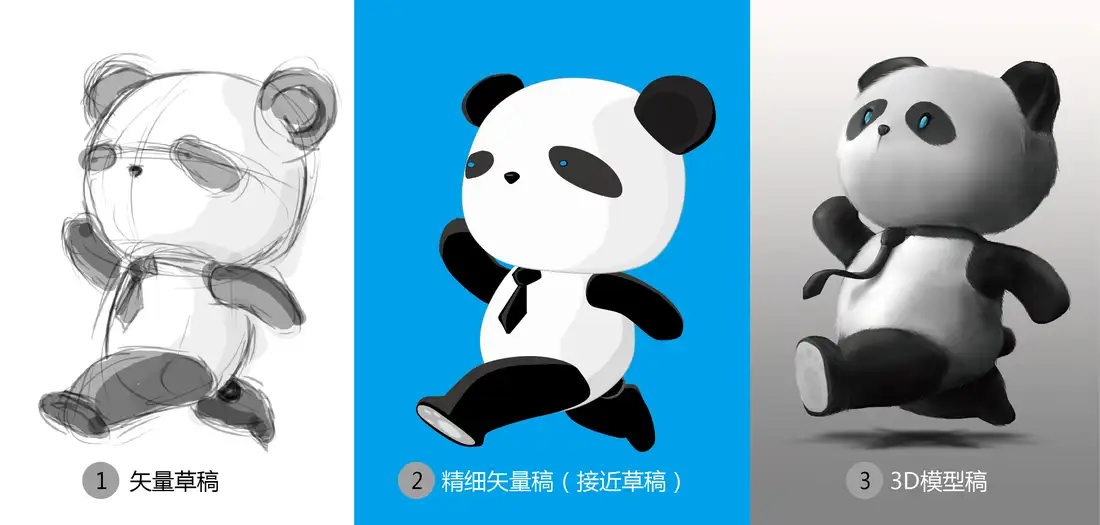
The Good Workday Kit
This independent desk-object study treats Jumpanda as a quiet companion rather than office merchandise with a character printed on it. The figure shares a restrained field of paper, aluminium and black stationery; cobalt and red appear only as small moments of attention. The design decision is deliberately modest: a useful workplace object should improve the atmosphere before it announces a brand. Jumpanda supplies a little momentum at the edge of the notebook, as though the next task might be worth meeting halfway.
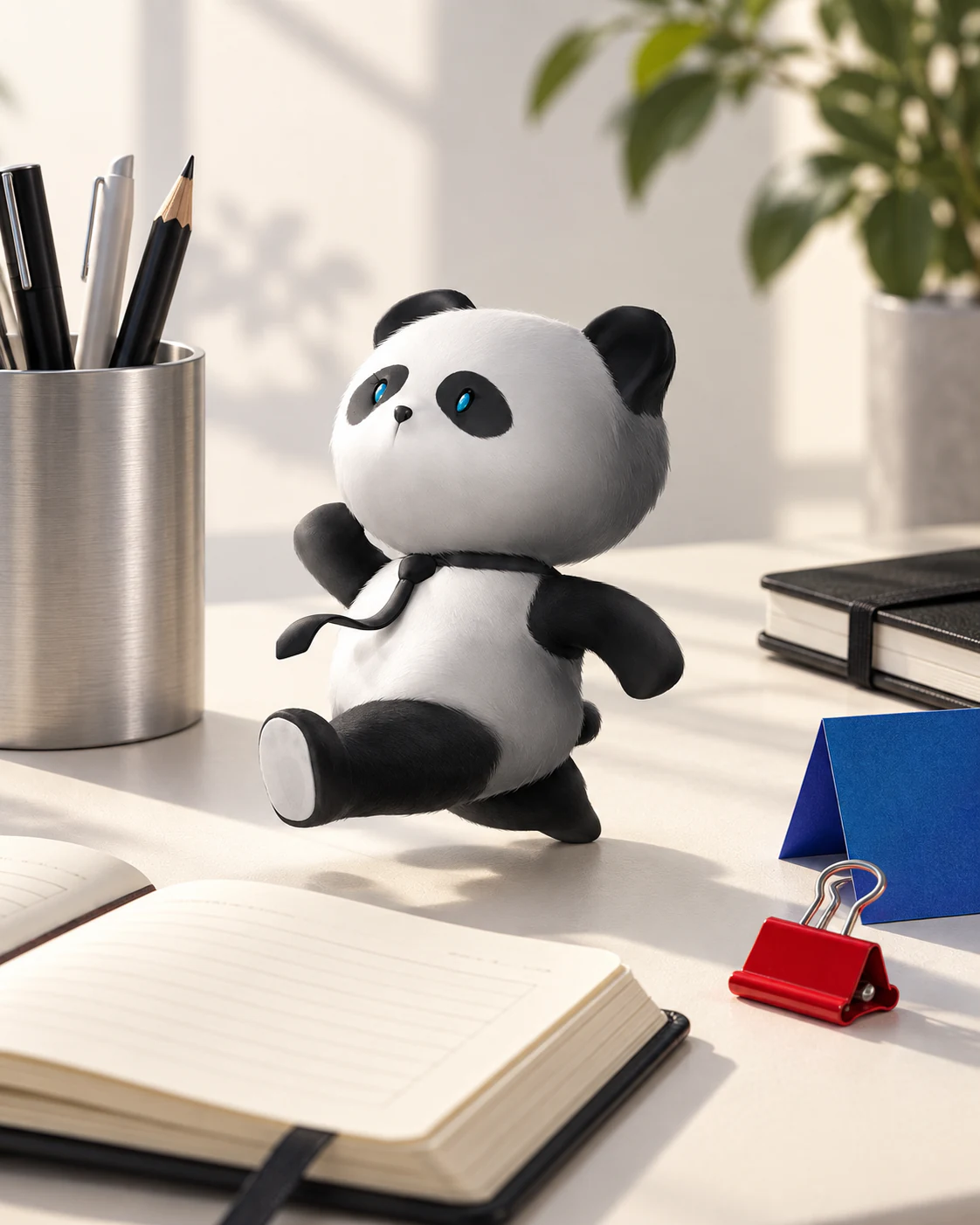
Workday Weather
A three-poster study turns the character's movement into a small emotional forecast. The first poster opens a gridded horizon, the second permits a pause on top of the paperwork, and the third crosses a blue threshold. There is no motivational copy because the images already carry the useful part of the message: work has different climates, and progress does not always need to look heroic. Grainy paper, hard geometry and the soft figure keep the series adult, tactile and just slightly absurd.
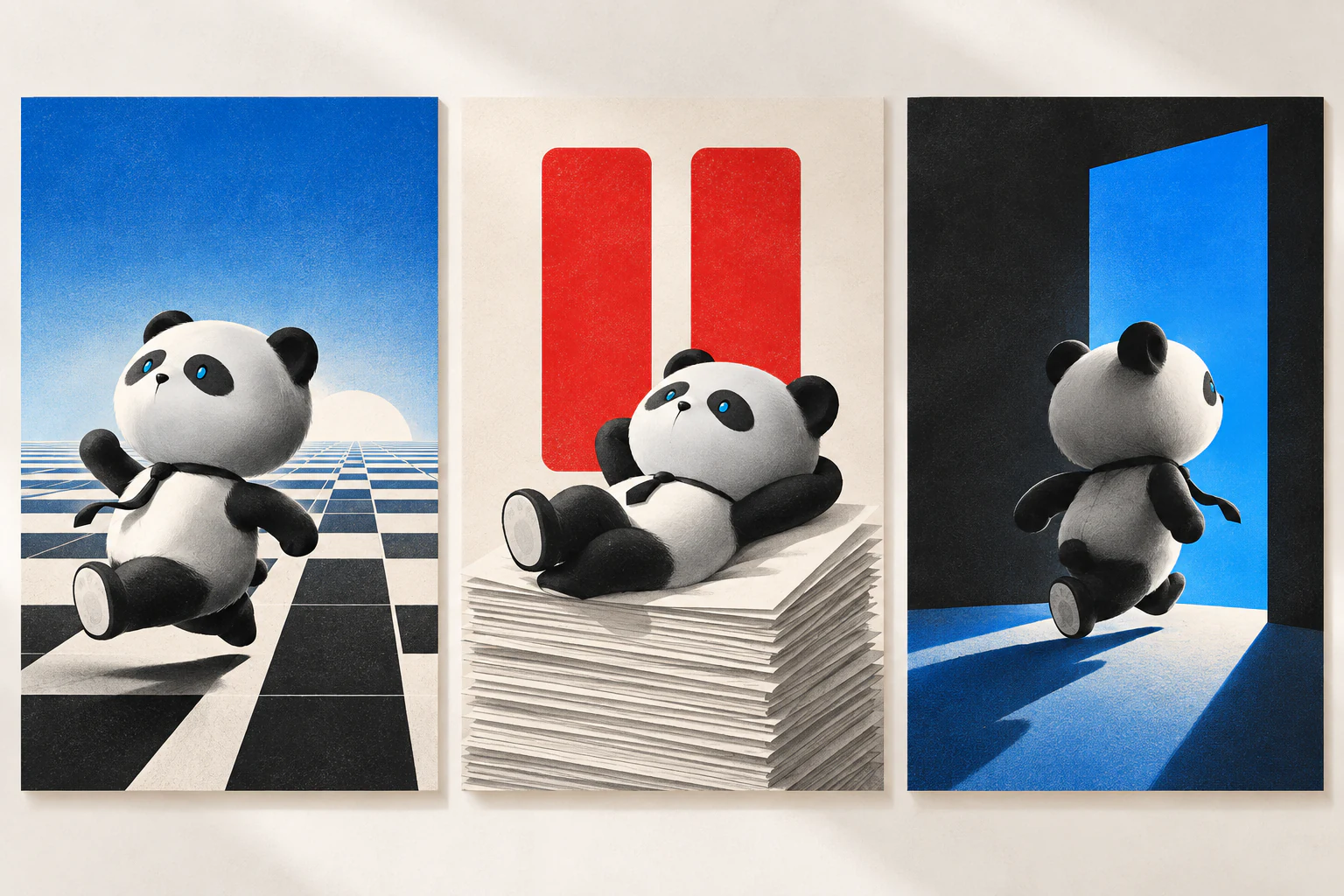
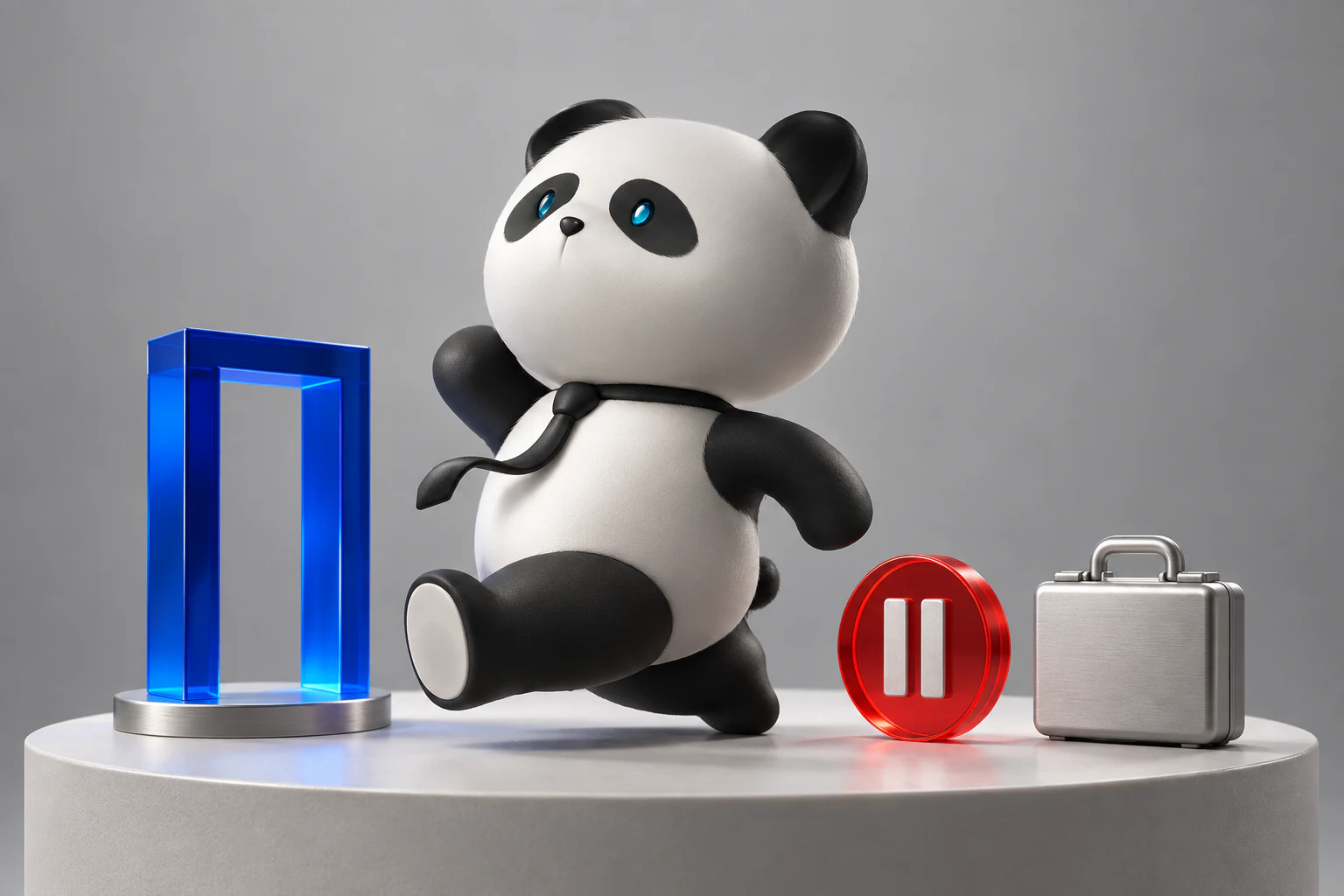
Nine-to-Five, Still Alive
This independent collectible study gives the original pose enough physical weight to become a desk-scale art object. A translucent blue doorway, red pause disc and small metal case turn familiar office symbols into an interchangeable set of choices: continue, stop, carry something useful. The figure remains soft and rounded while the accessories are exact and architectural. That contrast is the point. A working life needs systems, but it also needs something alive enough to step through them.
A Corridor That Knows the Way
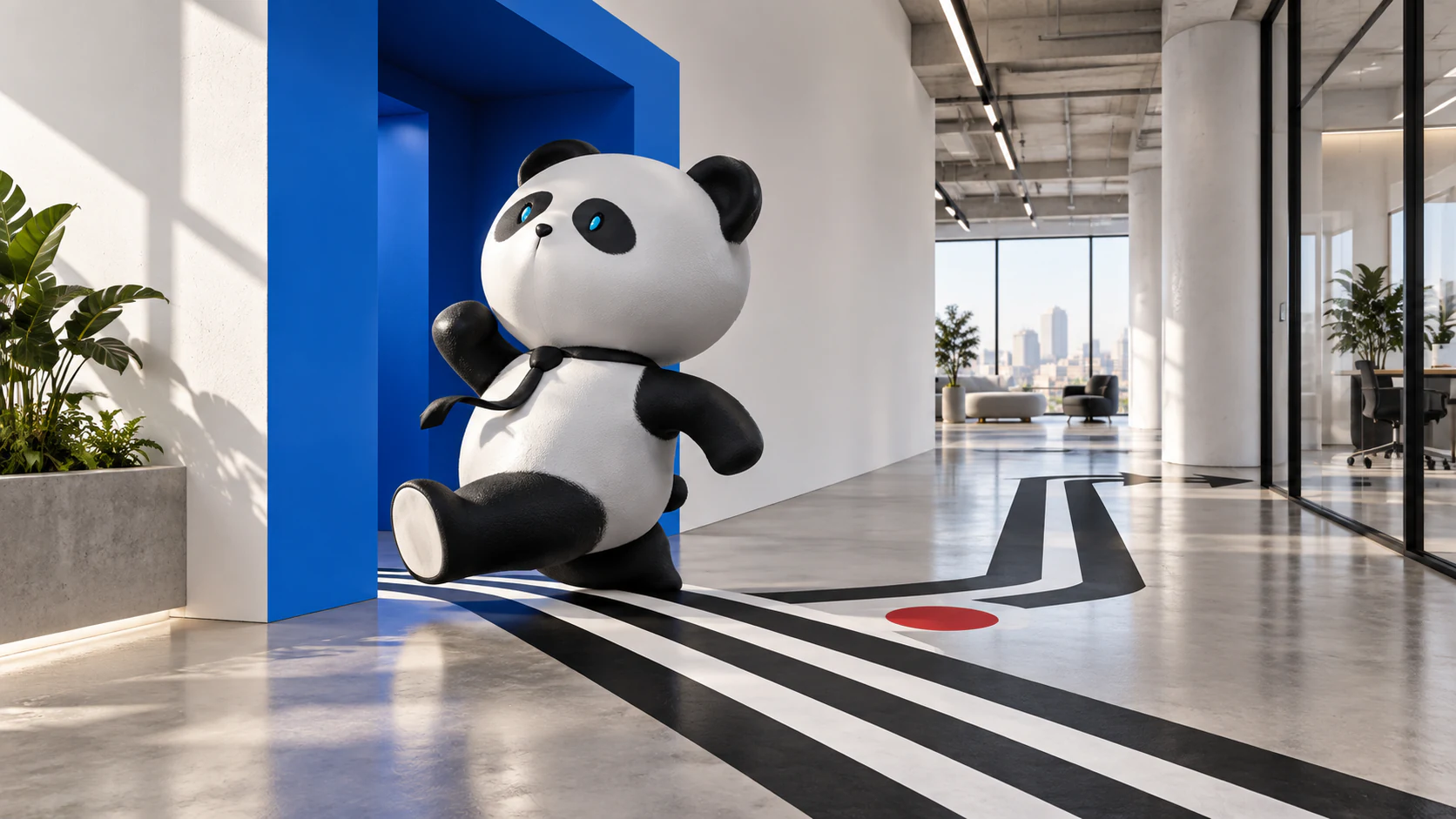
This independent spatial study uses Jumpanda as a piece of environmental storytelling. Black-and-white bands split into directions across the floor, a red circle marks the point where a decision is required, and the blue portal gives the journey a destination. The character is not pasted onto a sign; its lifted foot completes the wayfinding grammar. At architectural scale, the original silhouette becomes a useful verb: enter, cross, keep going.
The Commute Between Two Thoughts
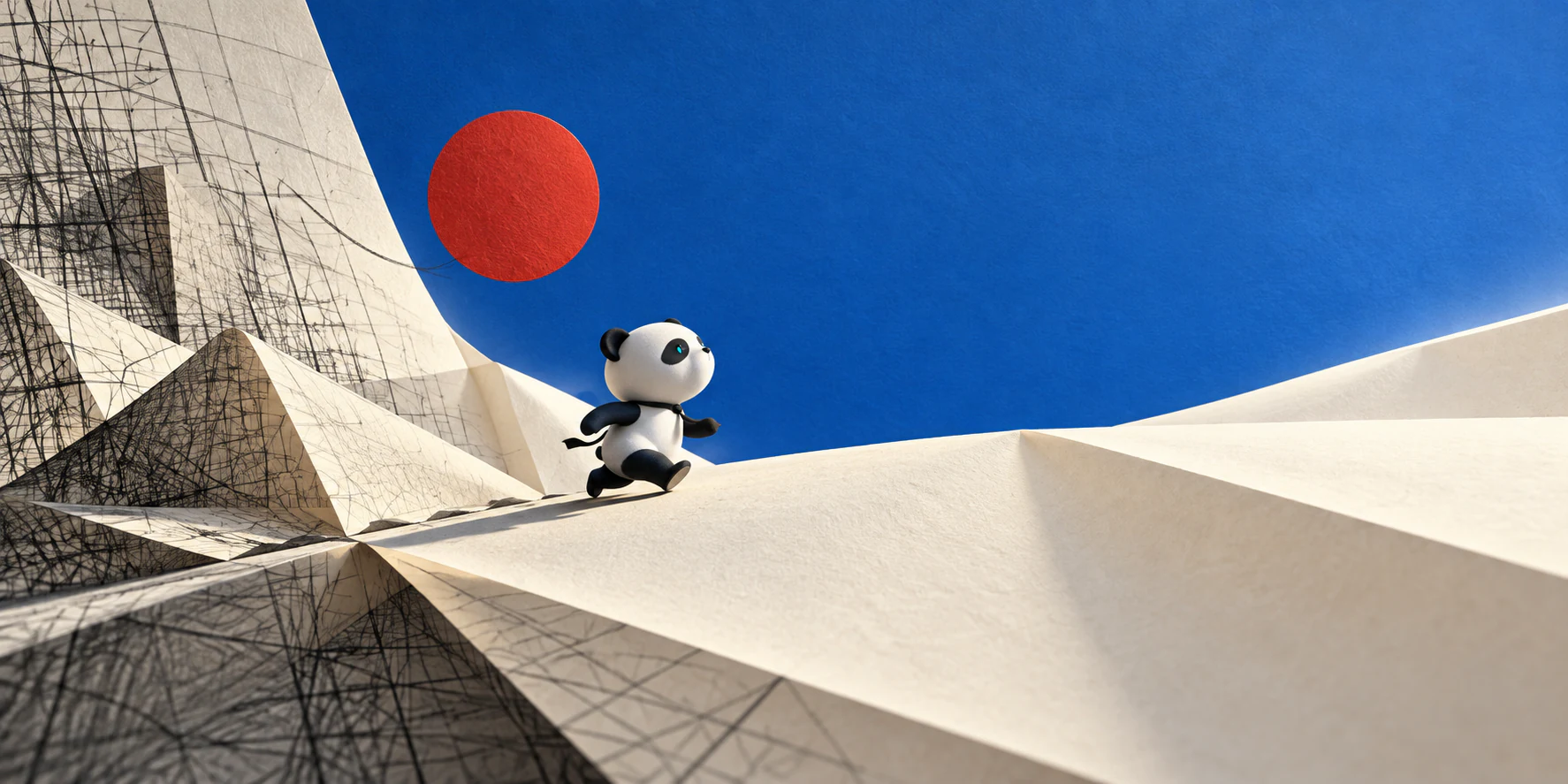
This independent editorial scene moves the character away from literal office furniture and into a mental landscape. Dense graphite lines gather on one side of a folded paper world; open blue space waits on the other. Jumpanda crosses the crease while a red circle hangs in the sky like a clock that has briefly lost its authority. The image broadens the project from workplace humour into a small philosophy of motion: clarity is rarely found by standing where the page is already crowded.
The Buoyant Workday

The first motion study returns to the most important line in the original drawing: the body is already airborne. A compact loop adds anticipation, lift, landing and a soft shadow response while the surrounding circle, grid and doorway breathe at a slower pace. Nothing dramatic happens, which is exactly the idea. The animation treats resilience as a repeatable physical habit rather than a slogan. Jumpanda lands, gathers itself and goes again.
The Action Grammar
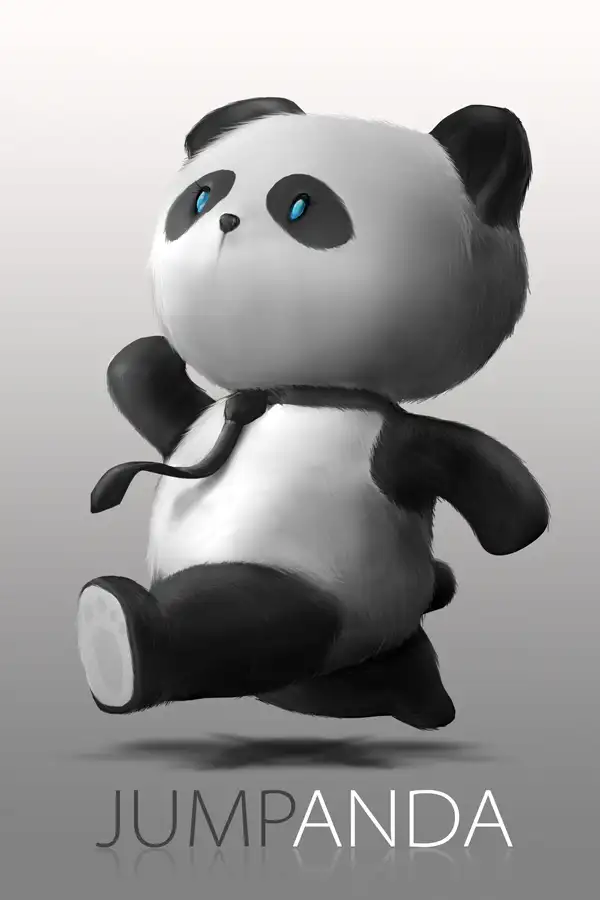
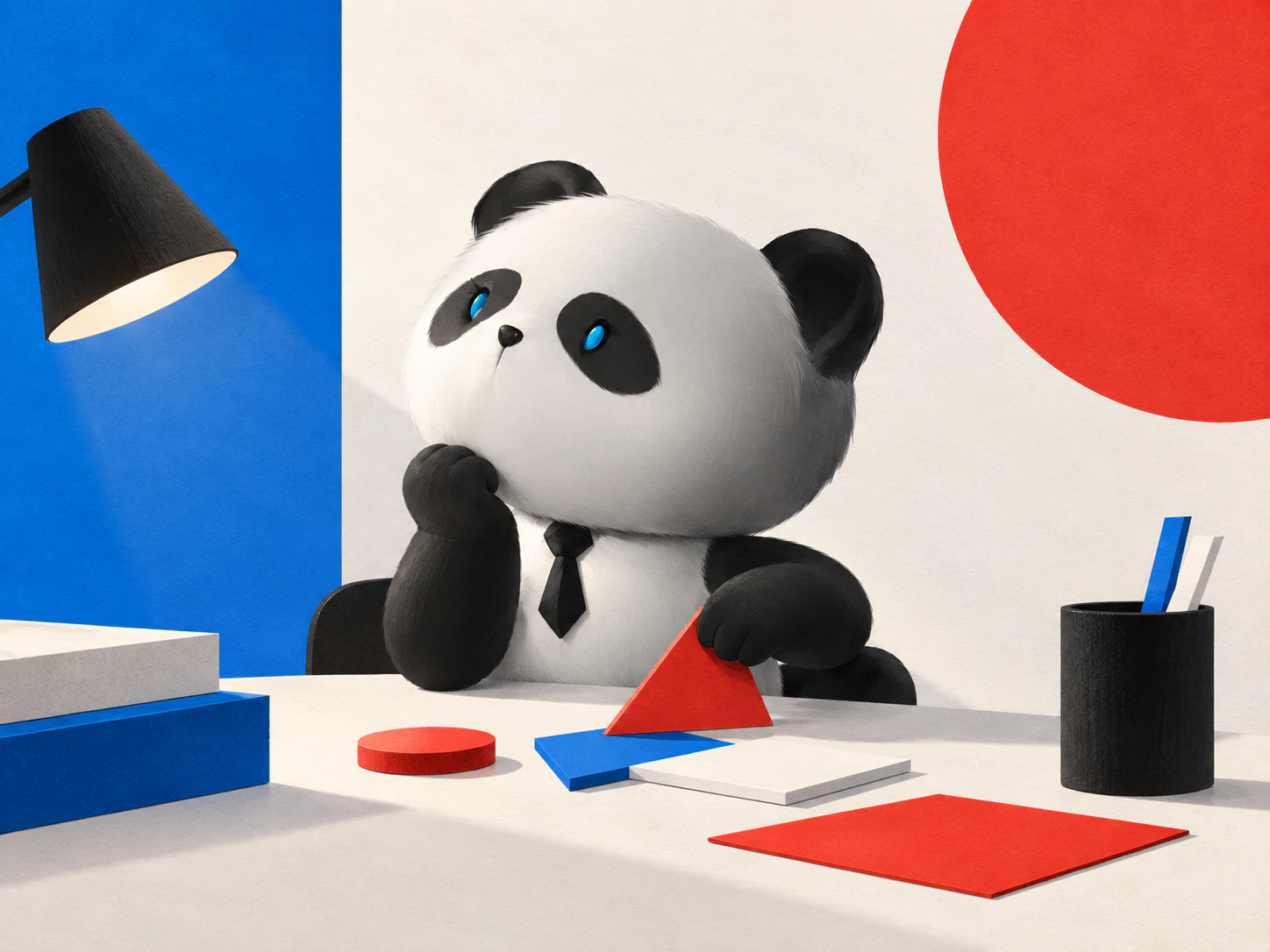
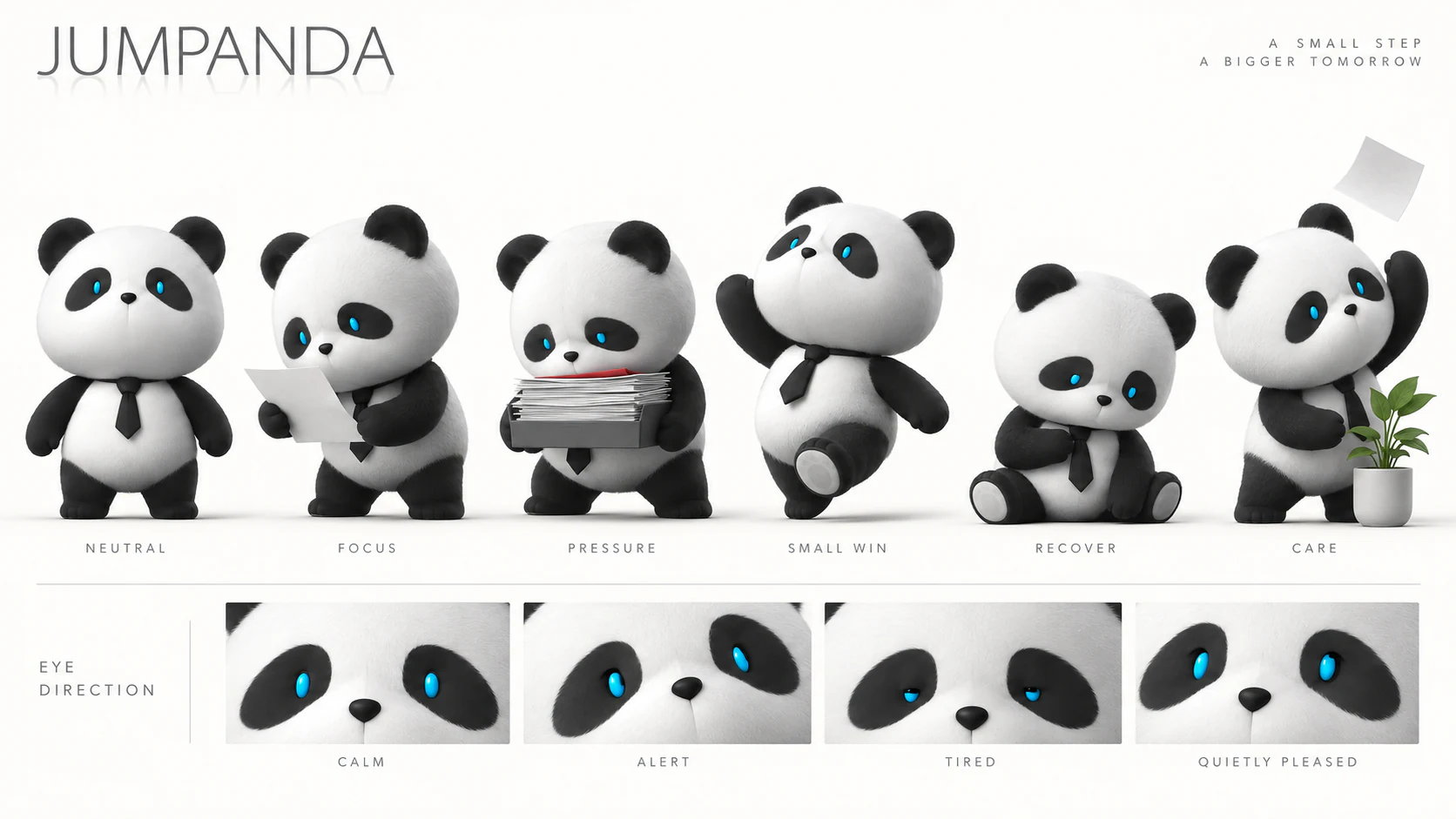
Jumpanda does not need to spend its whole life jumping. This action study treats the character as an actor with a repeatable physical language: the oversized head holds attention, the low centre of gravity makes effort visible, the tiny tie keeps every situation faintly official, and the blue eyes provide one sharp point of focus. Those anchors stay fixed while posture, tempo, props and emotional pressure are allowed to change. Thinking compresses the body into a question mark. Presenting opens it toward an audience. Carrying turns a cardboard box into a test of stubborn optimism. After failure, Jumpanda straightens the tie before standing up; during a break, it remains alert without performing productivity. The result is not a pose collection but a behavioural system. A recognisable character should survive sitting still, getting something wrong and doing ordinary work, not only its most heroic silhouette.
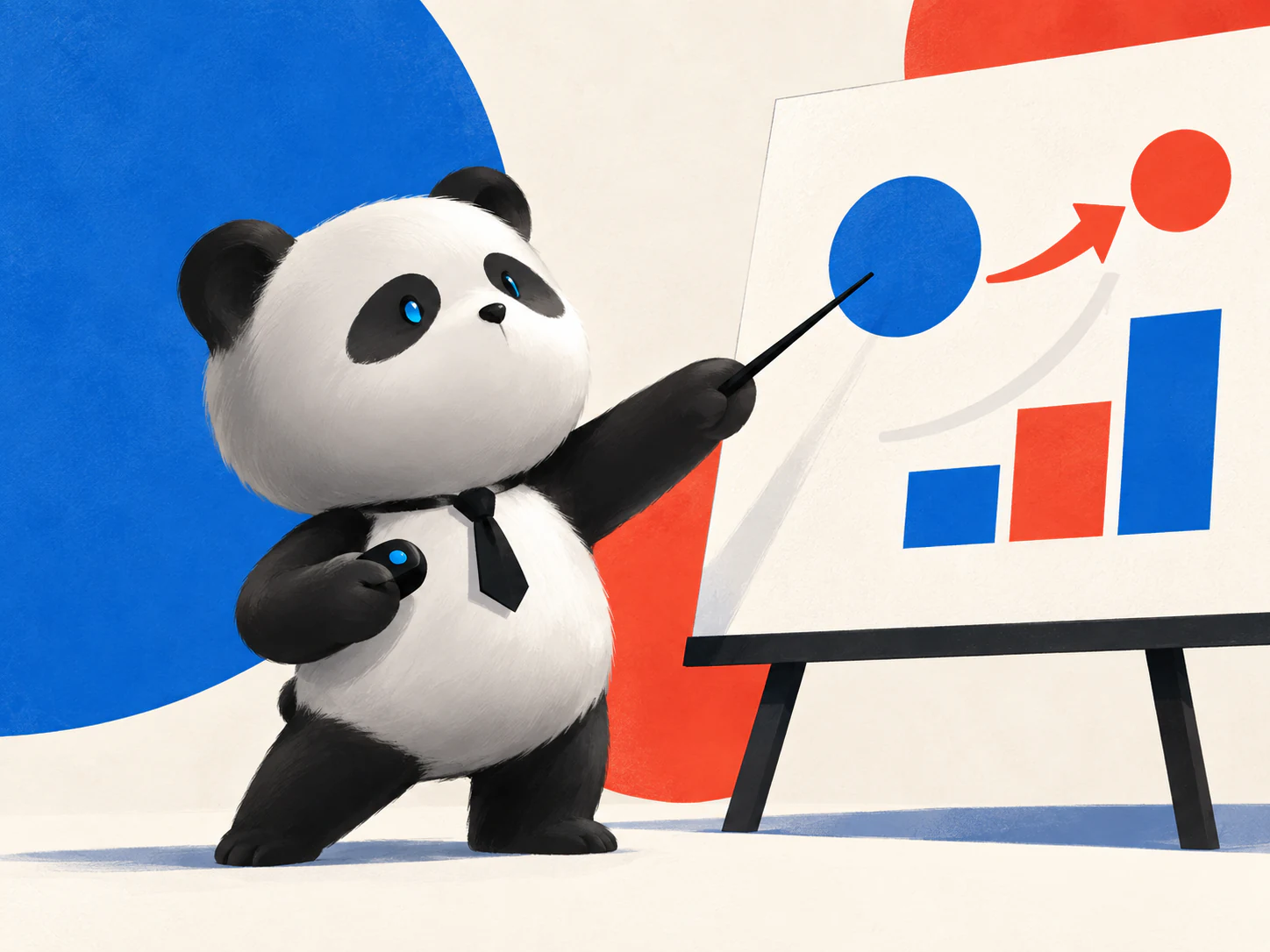
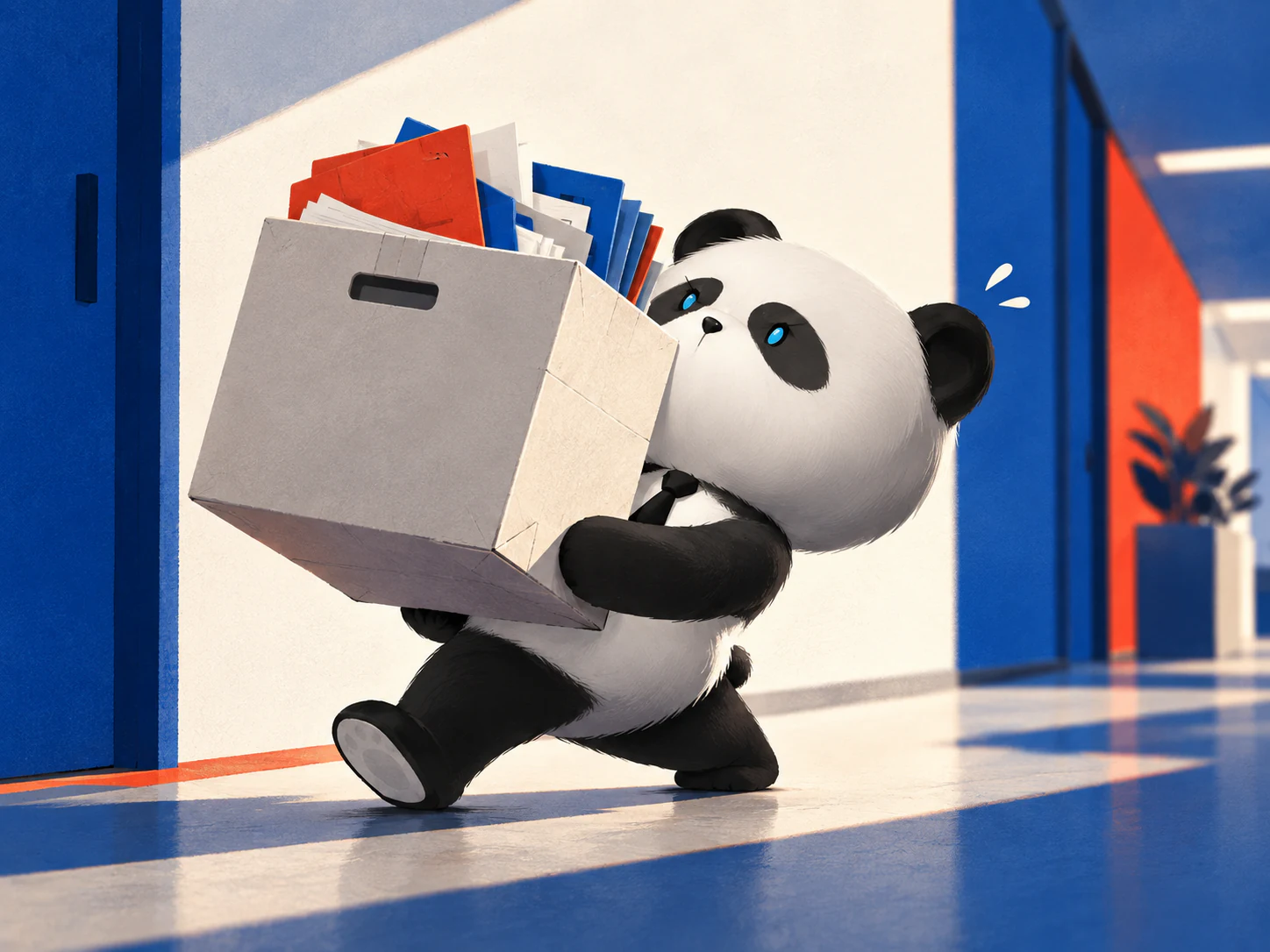
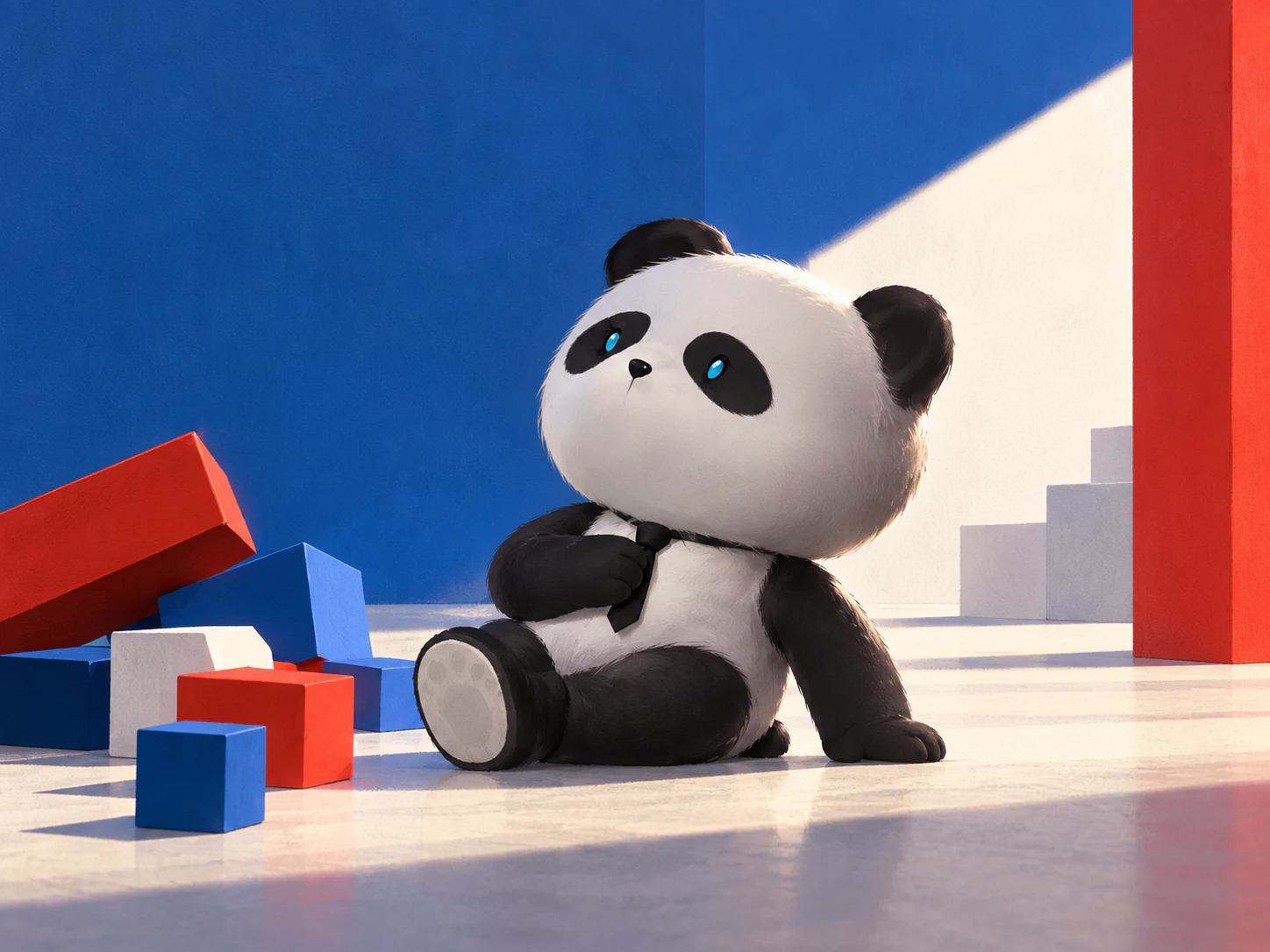
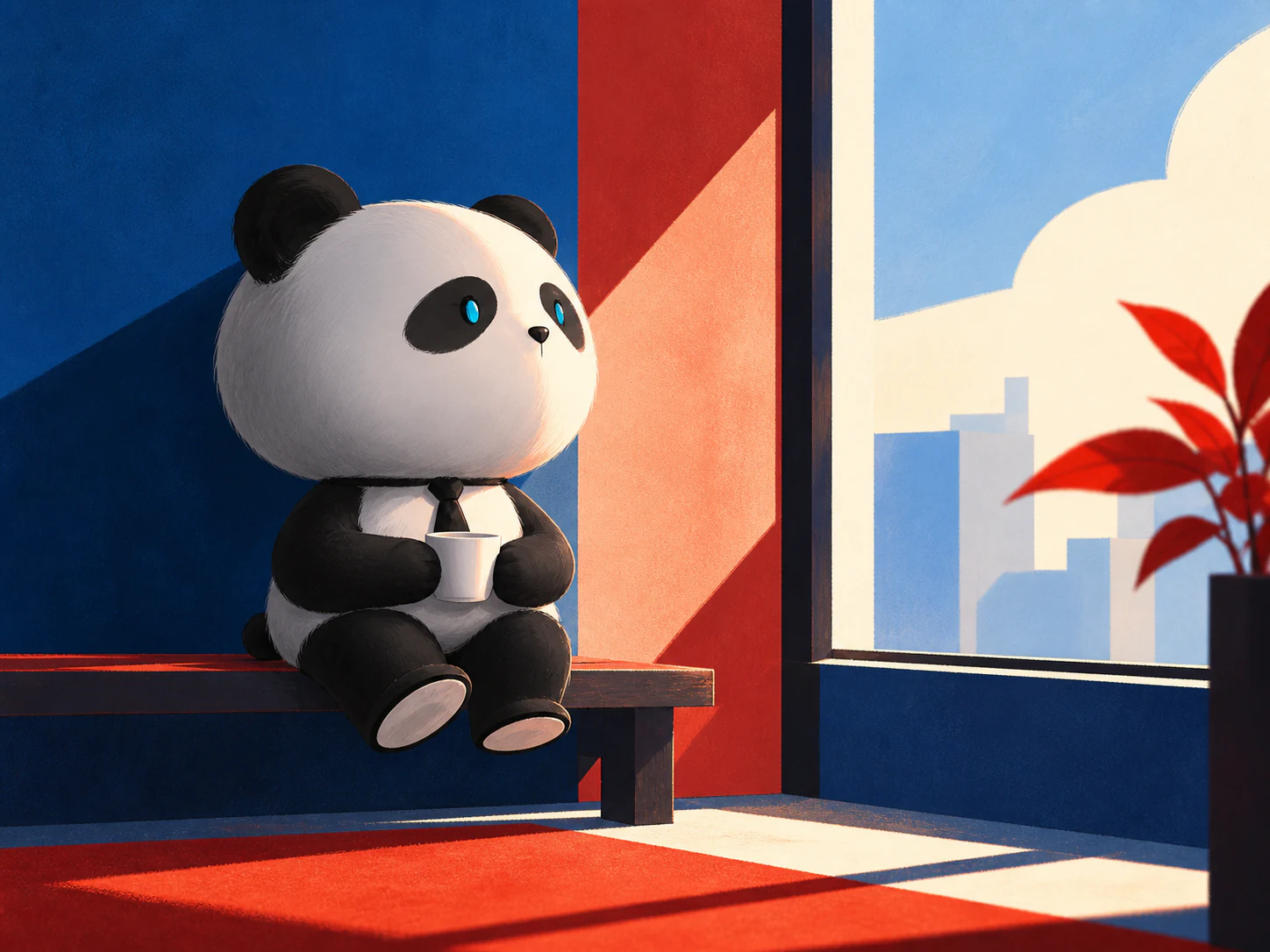
The Monday Crew
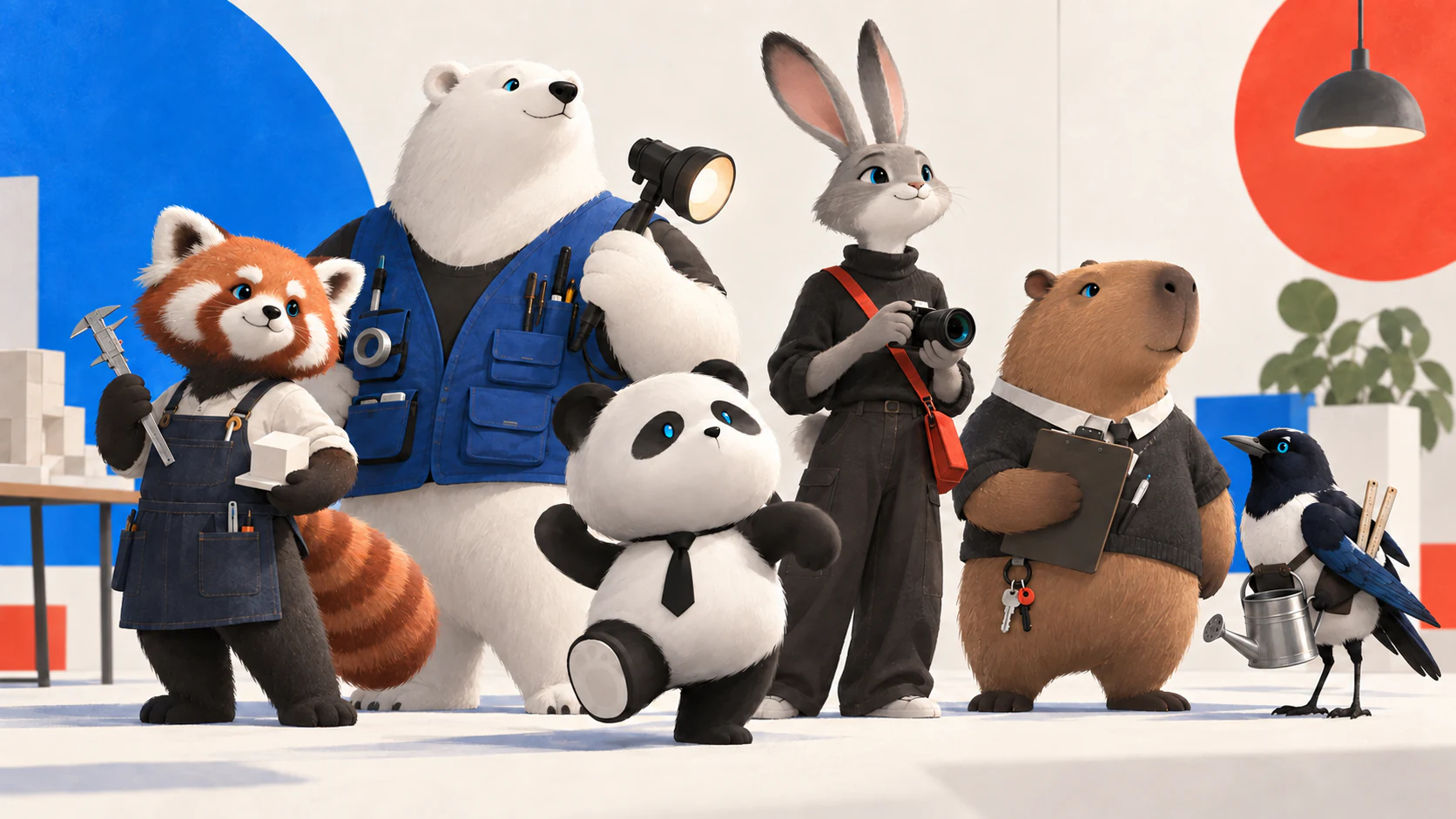
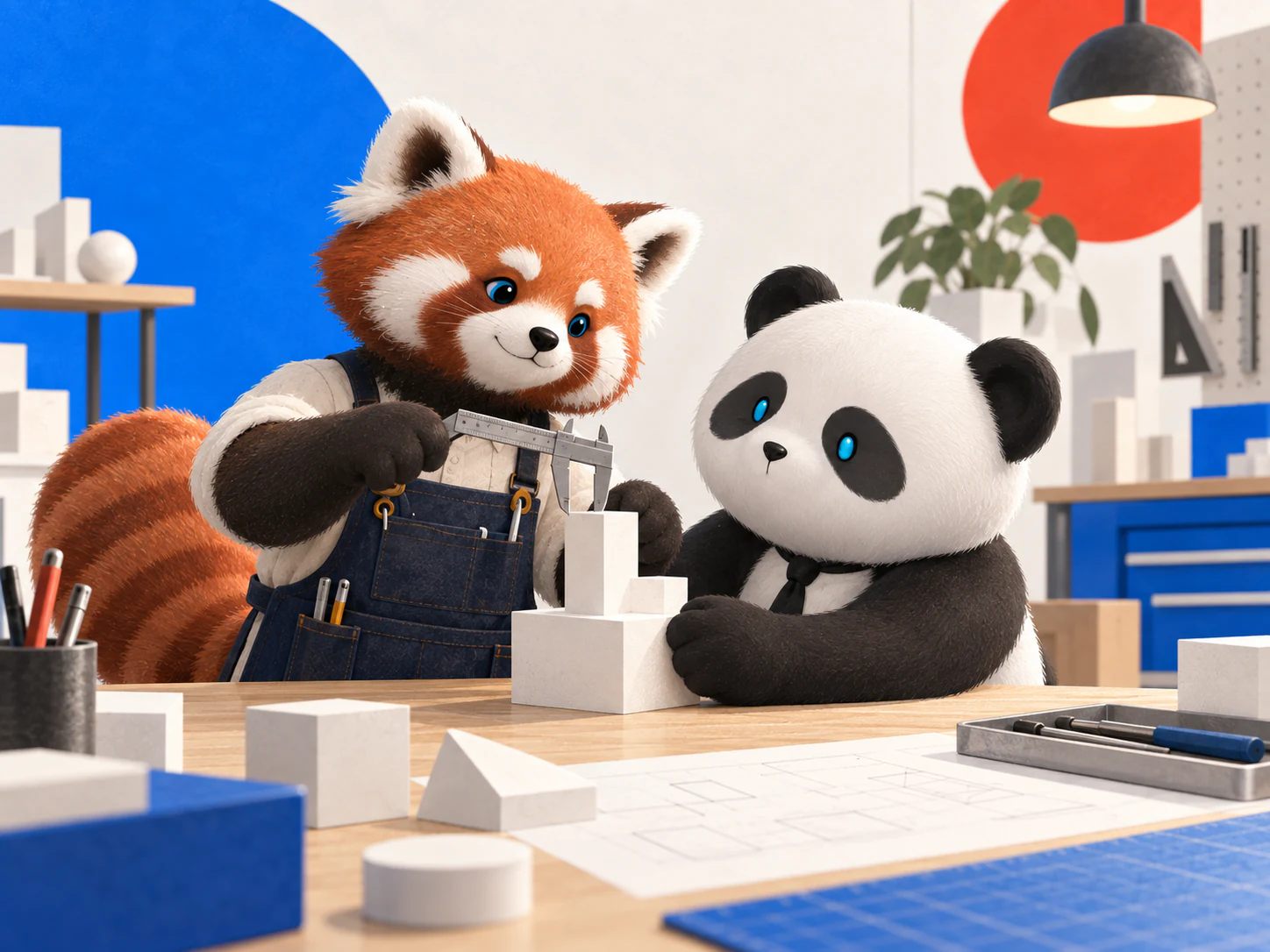
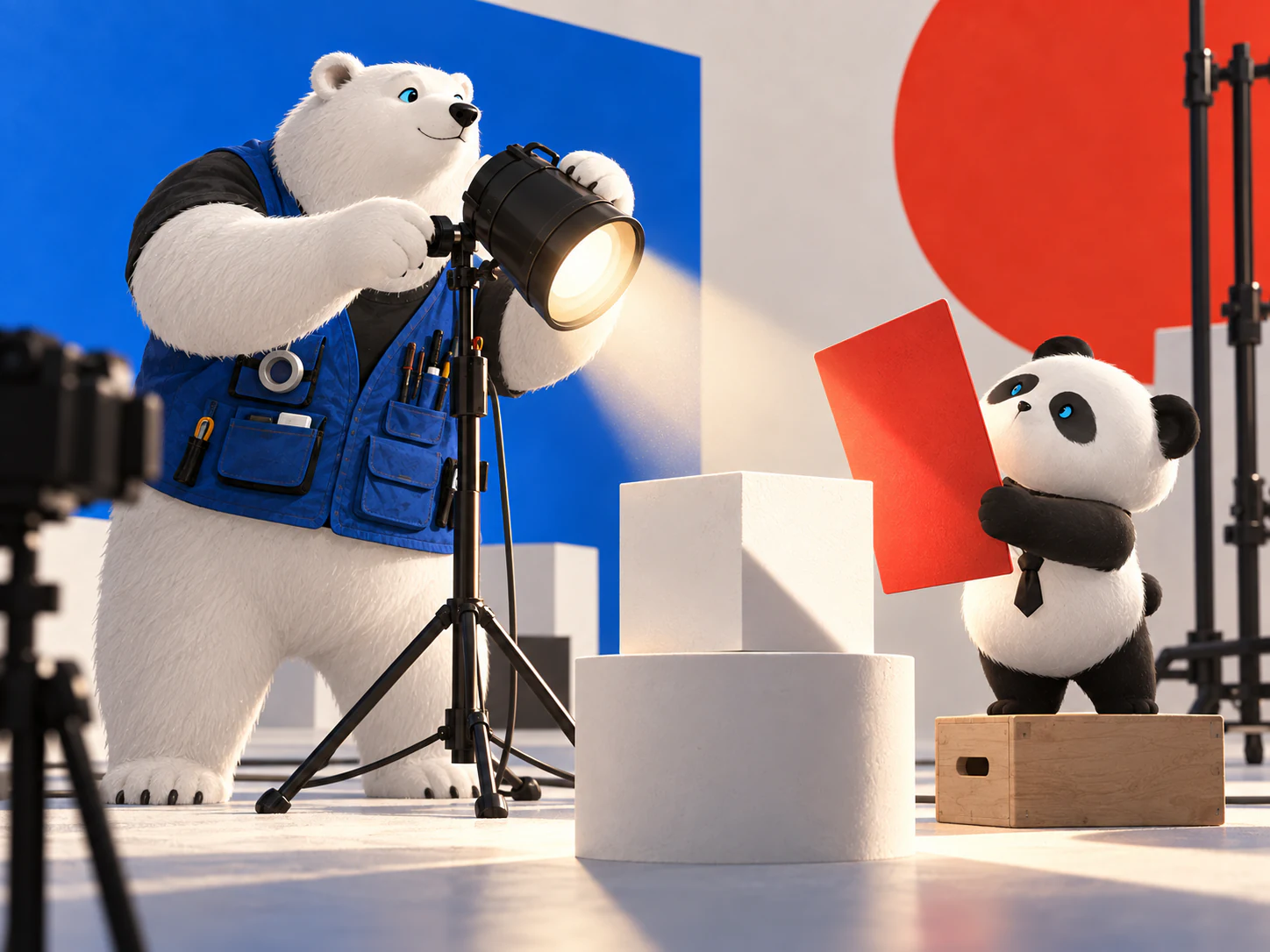
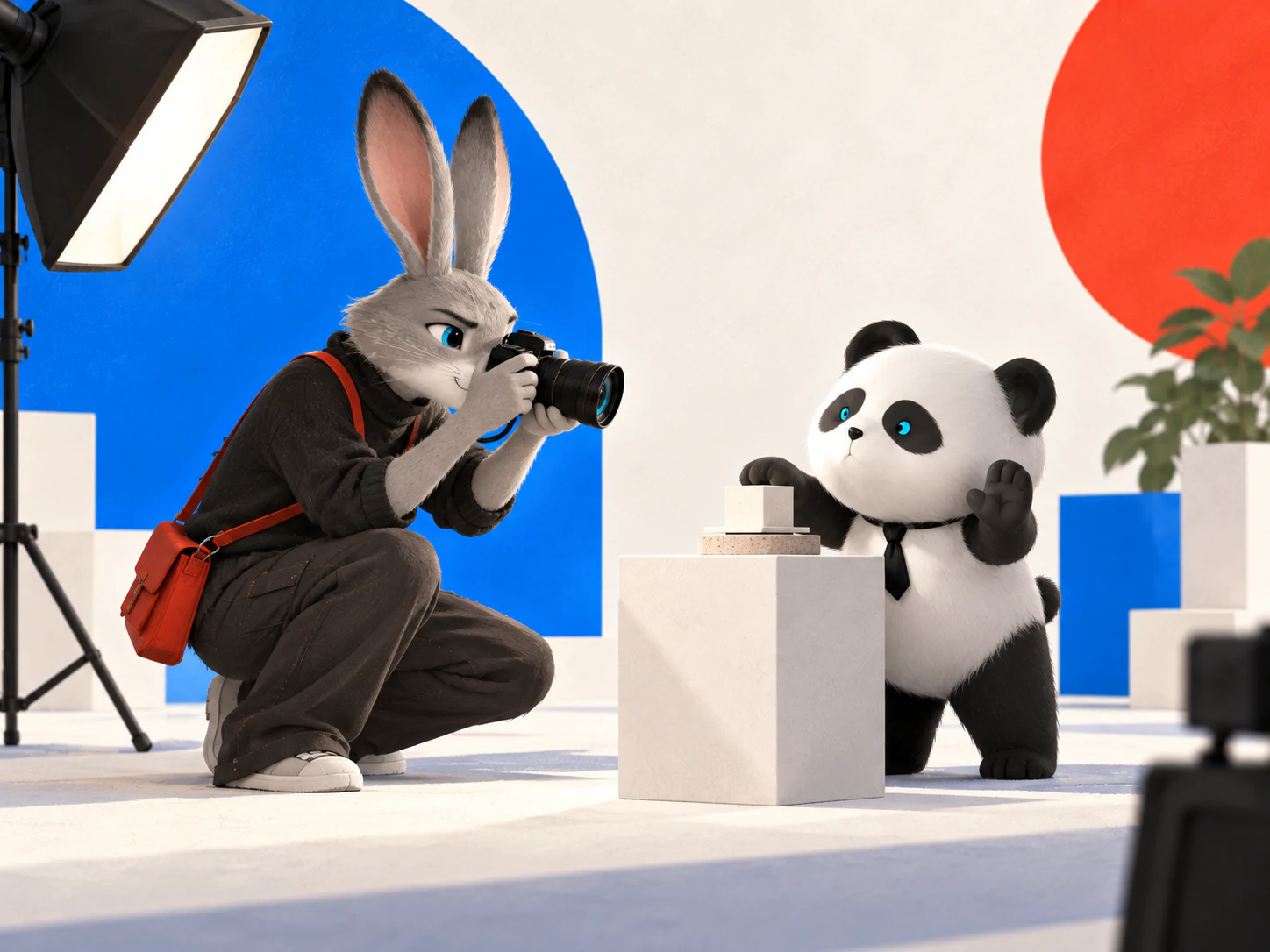
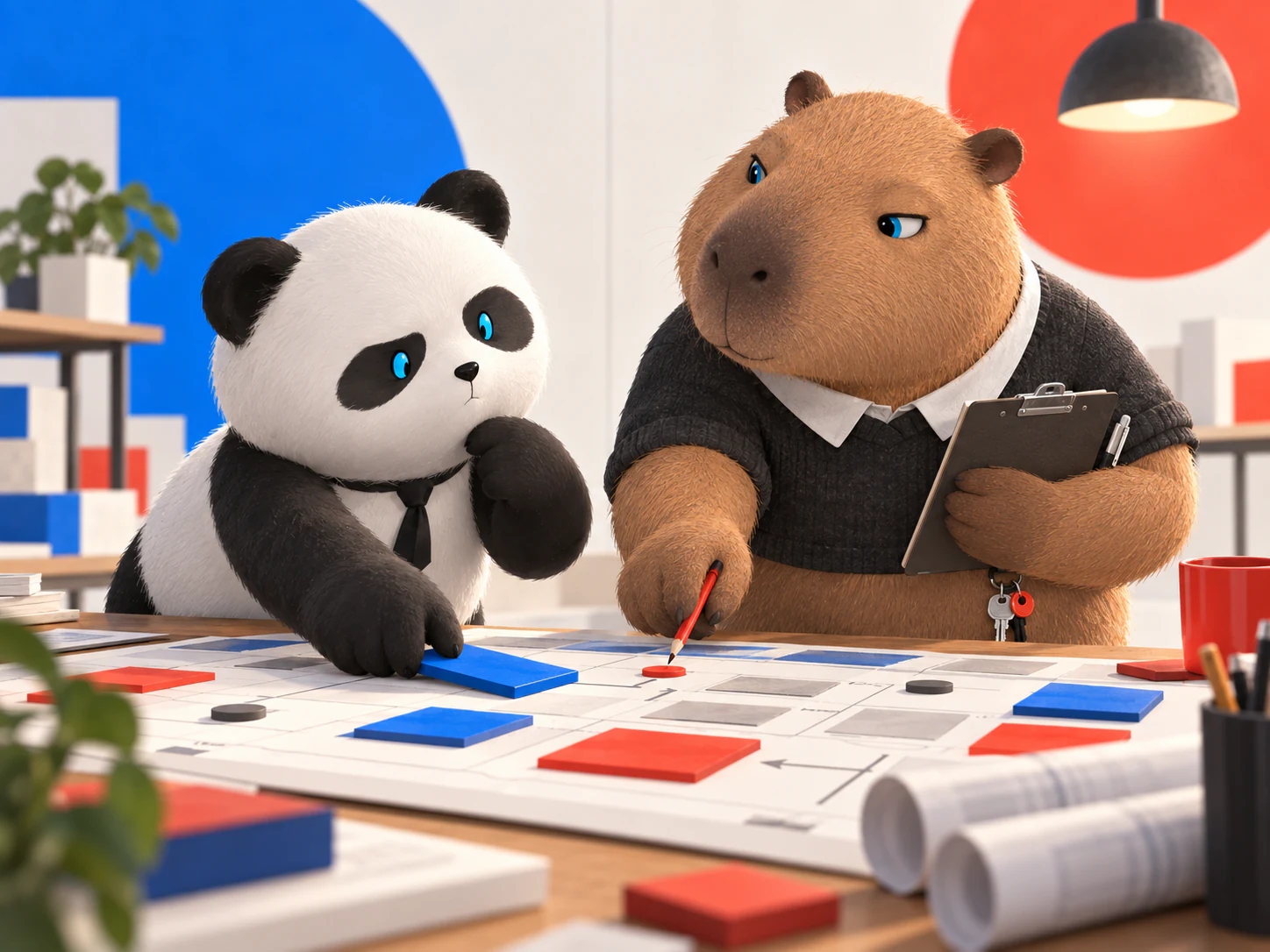
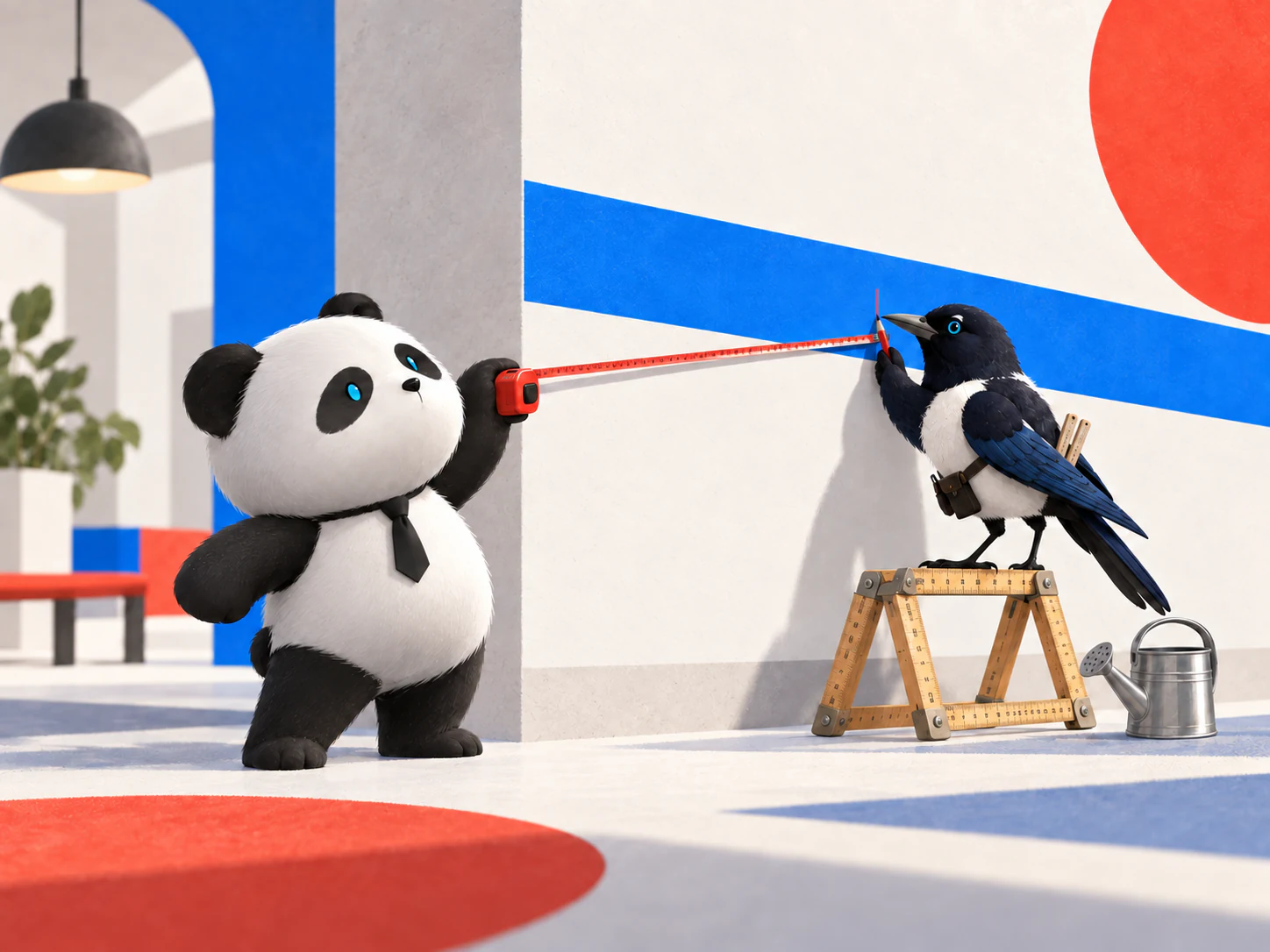
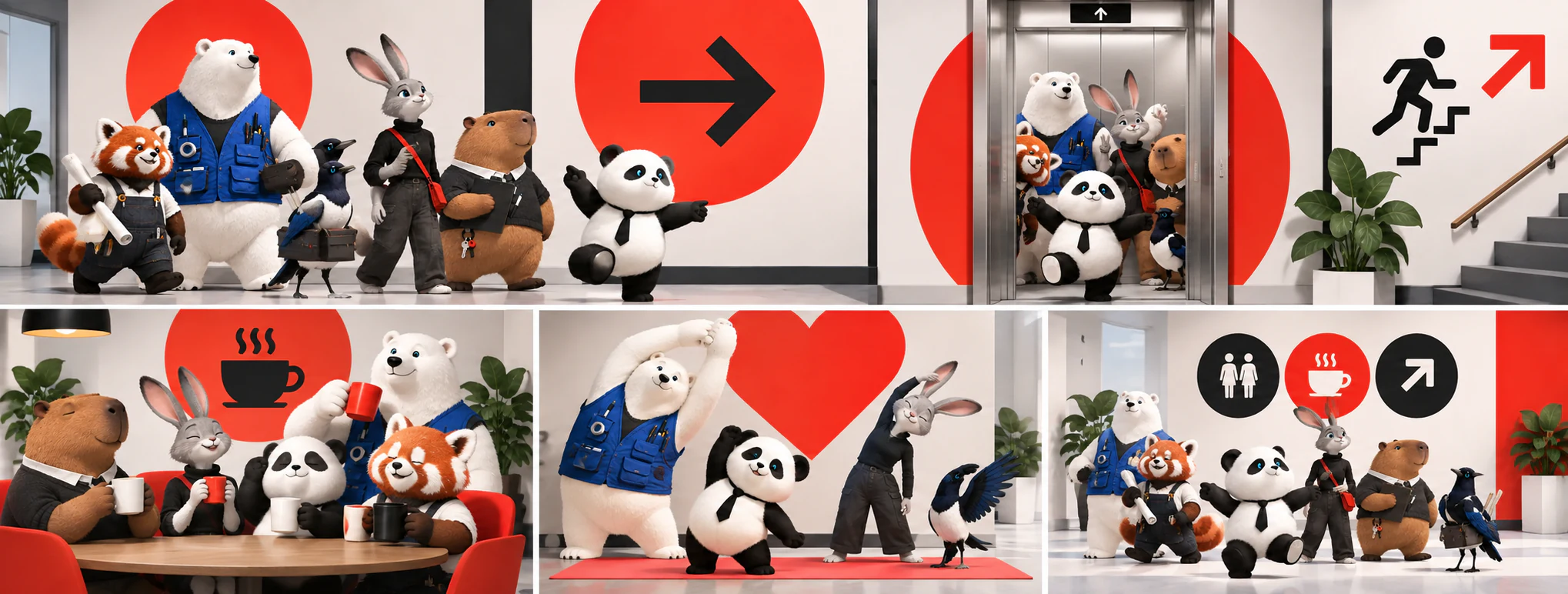
A character becomes more convincing when somebody else can interrupt its rhythm. The Monday Crew expands Jumpanda from a solitary office optimist into one member of a small working ecology. Mori, the red panda prototype maker, trusts millimetres more than opinions and gives ideas a physical edge. Lumen, the polar bear lighting technician, is large enough to move the equipment and patient enough to move it only two centimetres. Mika, the grey rabbit photographer, notices the frame before anyone else notices the room. Caro, the capybara project coordinator, turns competing priorities into a plan that can survive contact with Tuesday. Pip, the magpie spatial caretaker, measures walls, tends plants and remembers where the useful screws went. Their silhouettes, tools and working postures carry their professions; costumes only provide supporting evidence. More importantly, each colleague changes Jumpanda. It listens more carefully beside Mori, becomes a helpful pair of hands for Lumen, learns timing from Mika, negotiates with Caro and discovers practical accuracy with Pip. The cast is designed as a system of complementary tempos: quick eyes, heavy hands, quiet patience, measured judgement and restless optimism. They do not make work effortless. They make effort shareable.
A Better Day at Work
This independent character-system extension gives Jumpanda a wider working world. A small cast of colleagues turns wellbeing messages into situations rather than slogans: asking for help, taking a pause, sharing a task and finding the right room. The tone stays warm without becoming childish, while the recurring shapes and disciplined palette keep the campaign coherent across posters and wayfinding.
The Straight-Faced Worker
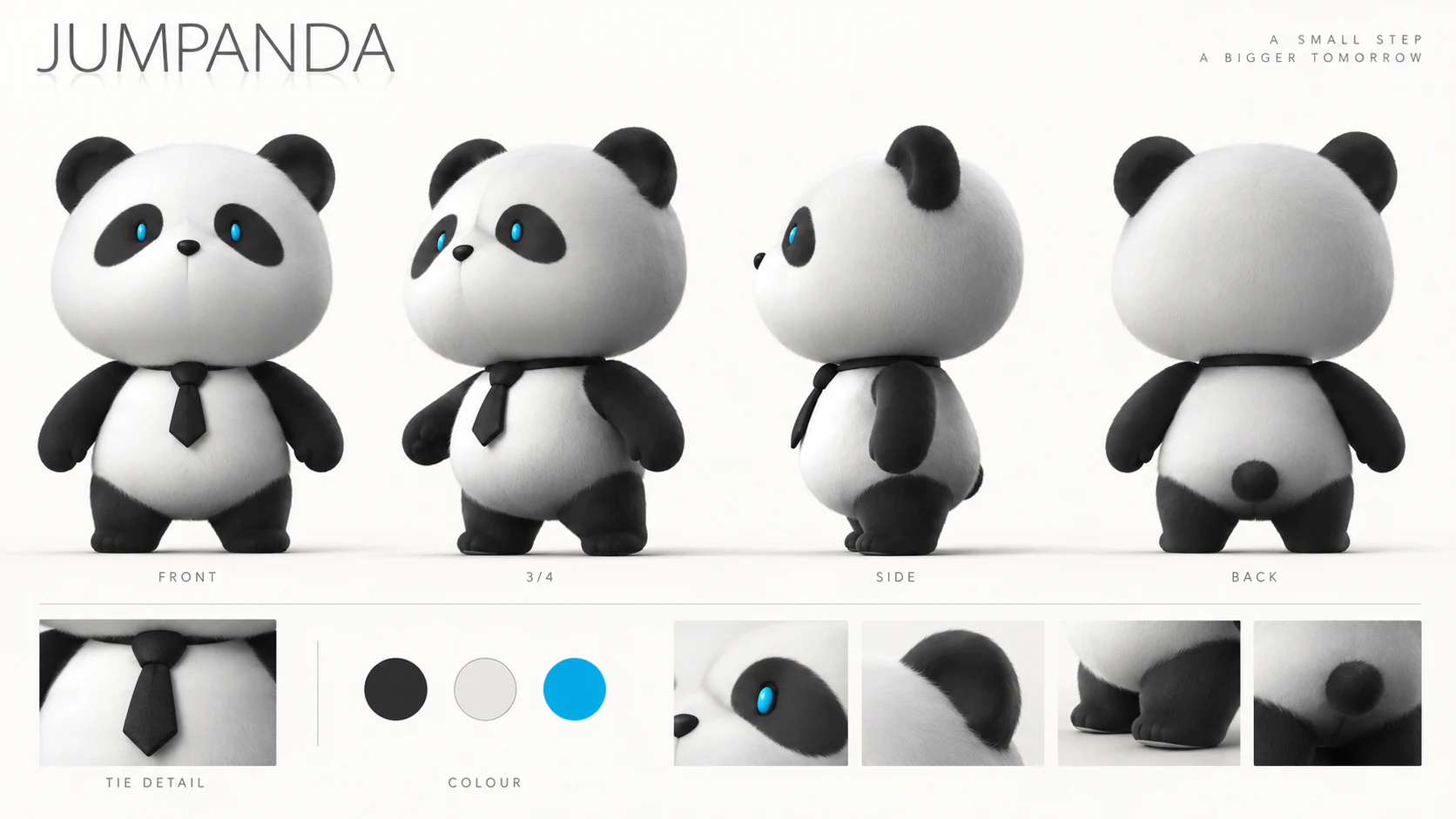
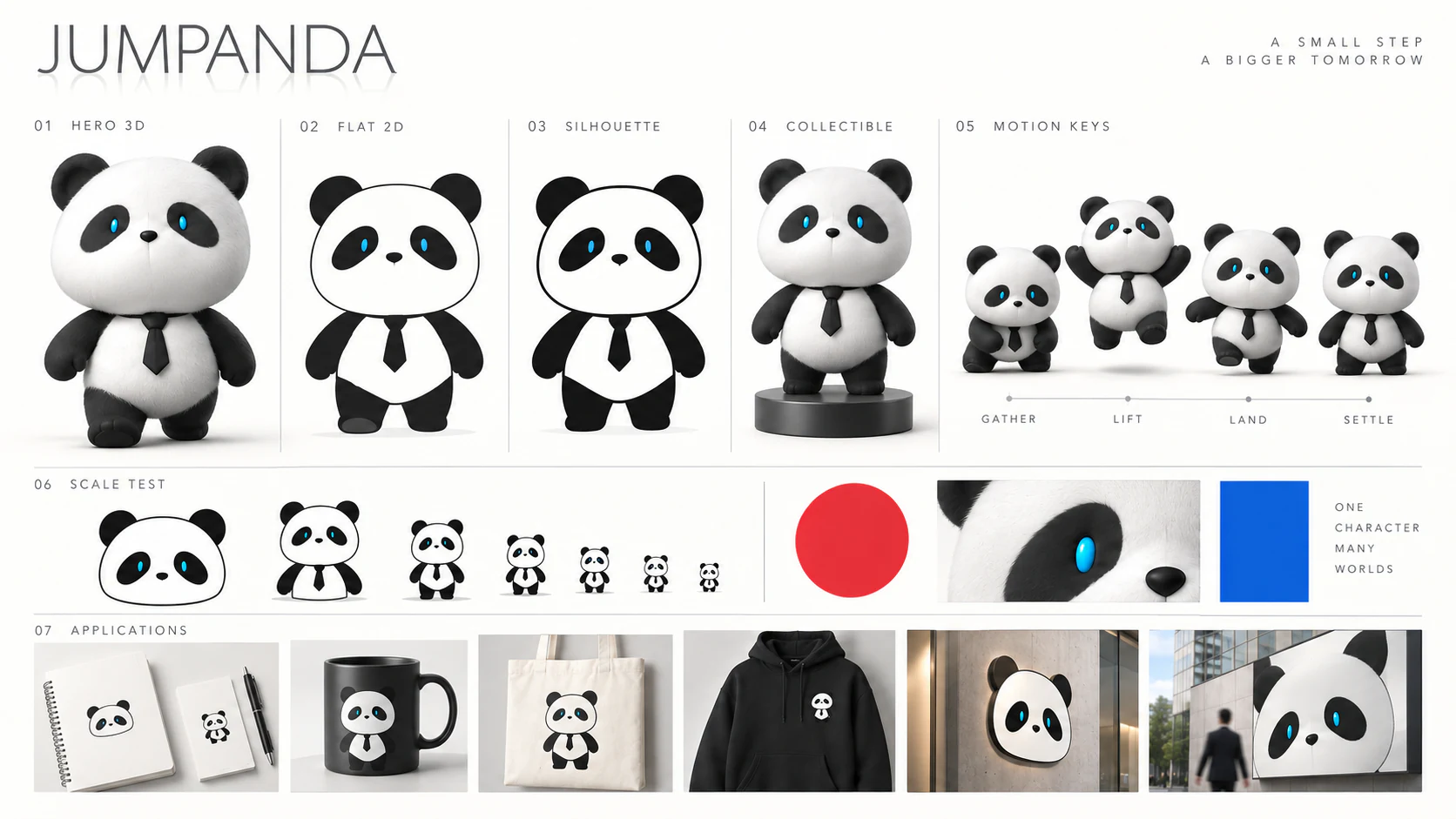
This independent character-bible extension turns the original visual joke into a production system. The model sheet fixes the compact proportions, black-and-white blocks and exact one-knot, one-blade tie; the performance sheet proves that a mouth is unnecessary when eyes, head angle, weight and paws do the acting; and the application sheet checks whether the same identity survives flat graphics, silhouettes, motion, objects and space. The rule is intentionally strict: Jumpanda keeps a straight face while work supplies the comedy. Earlier explorations remain visible as part of the project history, while these boards become the current reference for future character development rather than material from the original client-era project.
The Office Food Chain
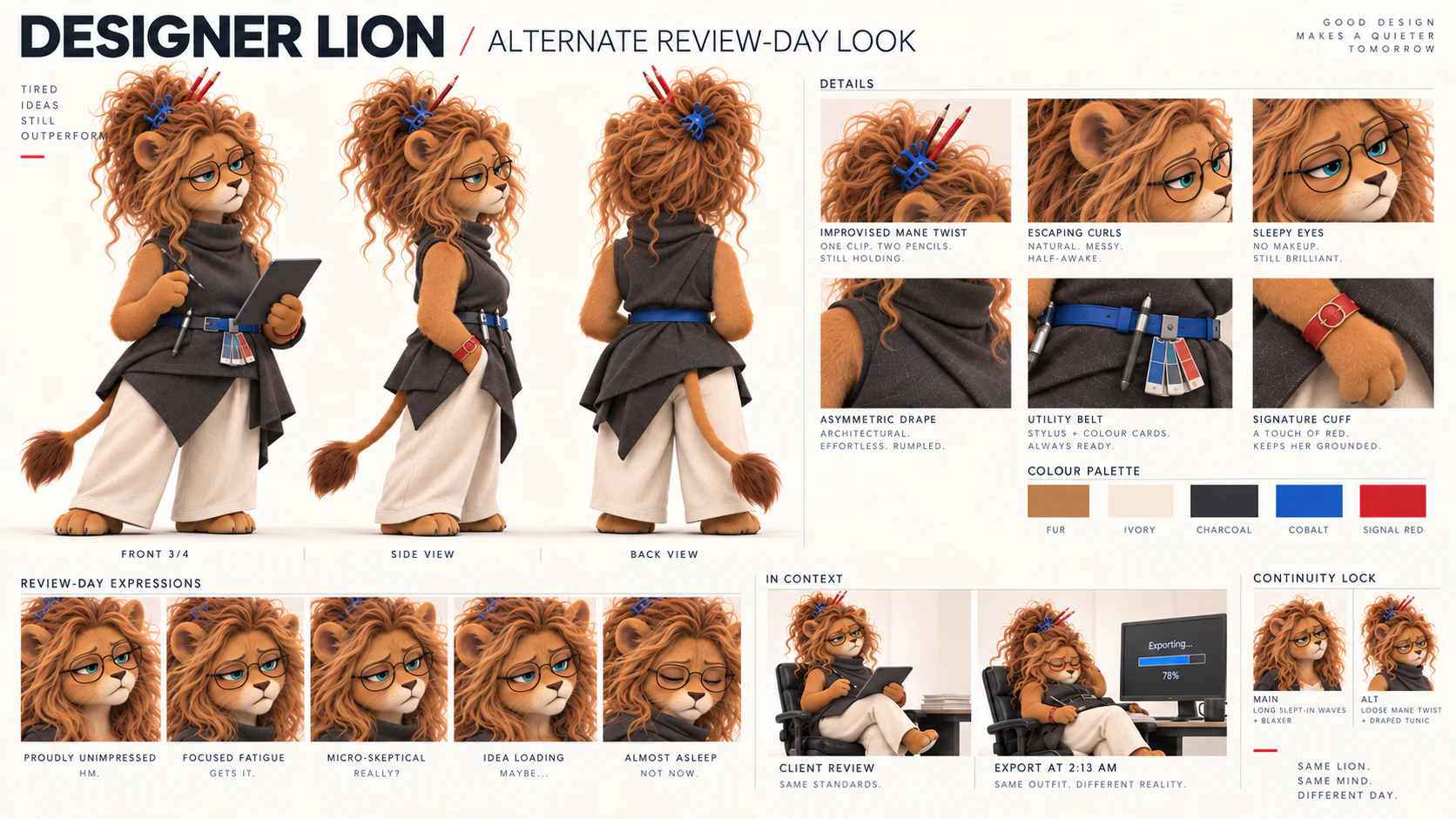
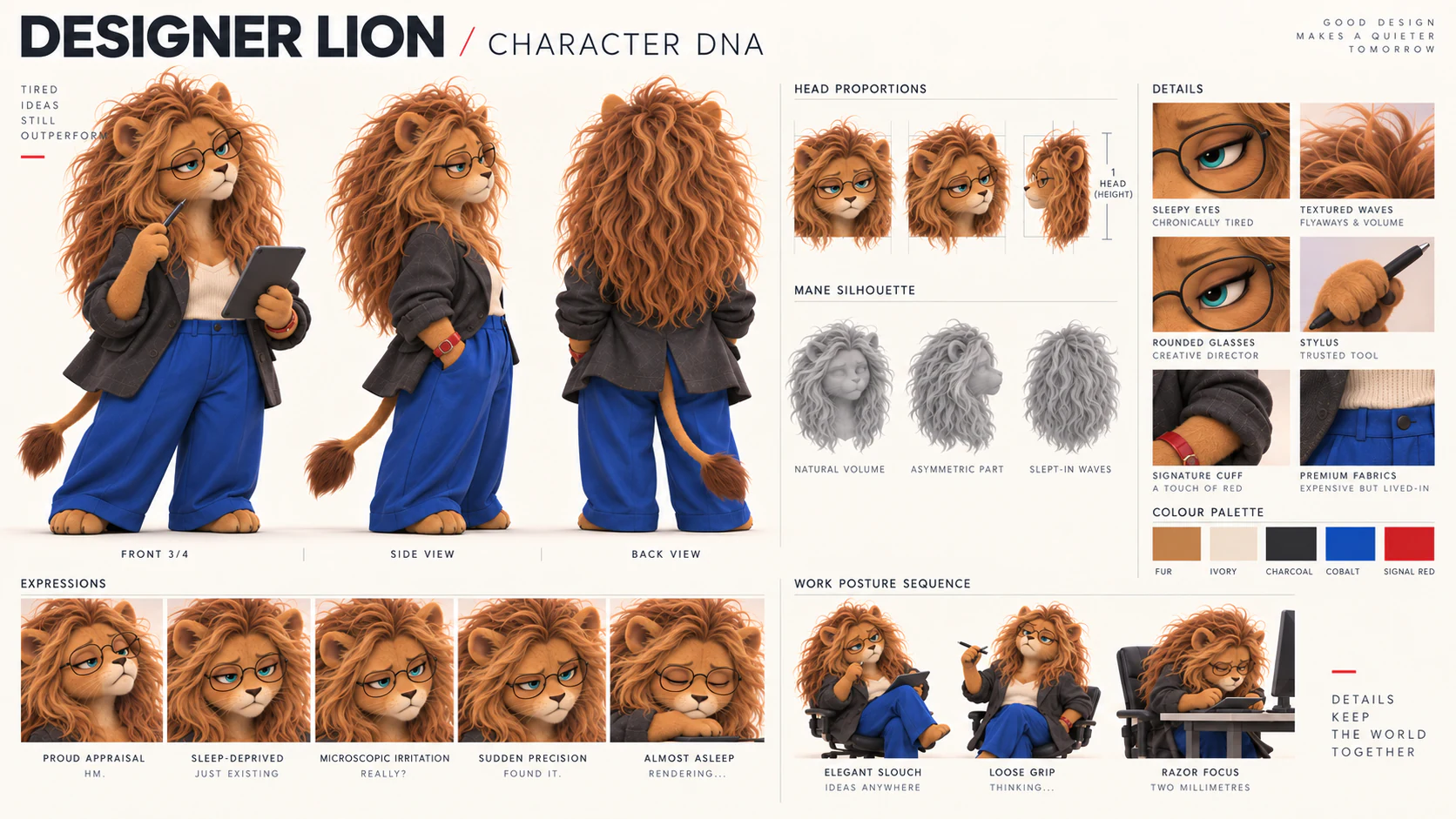
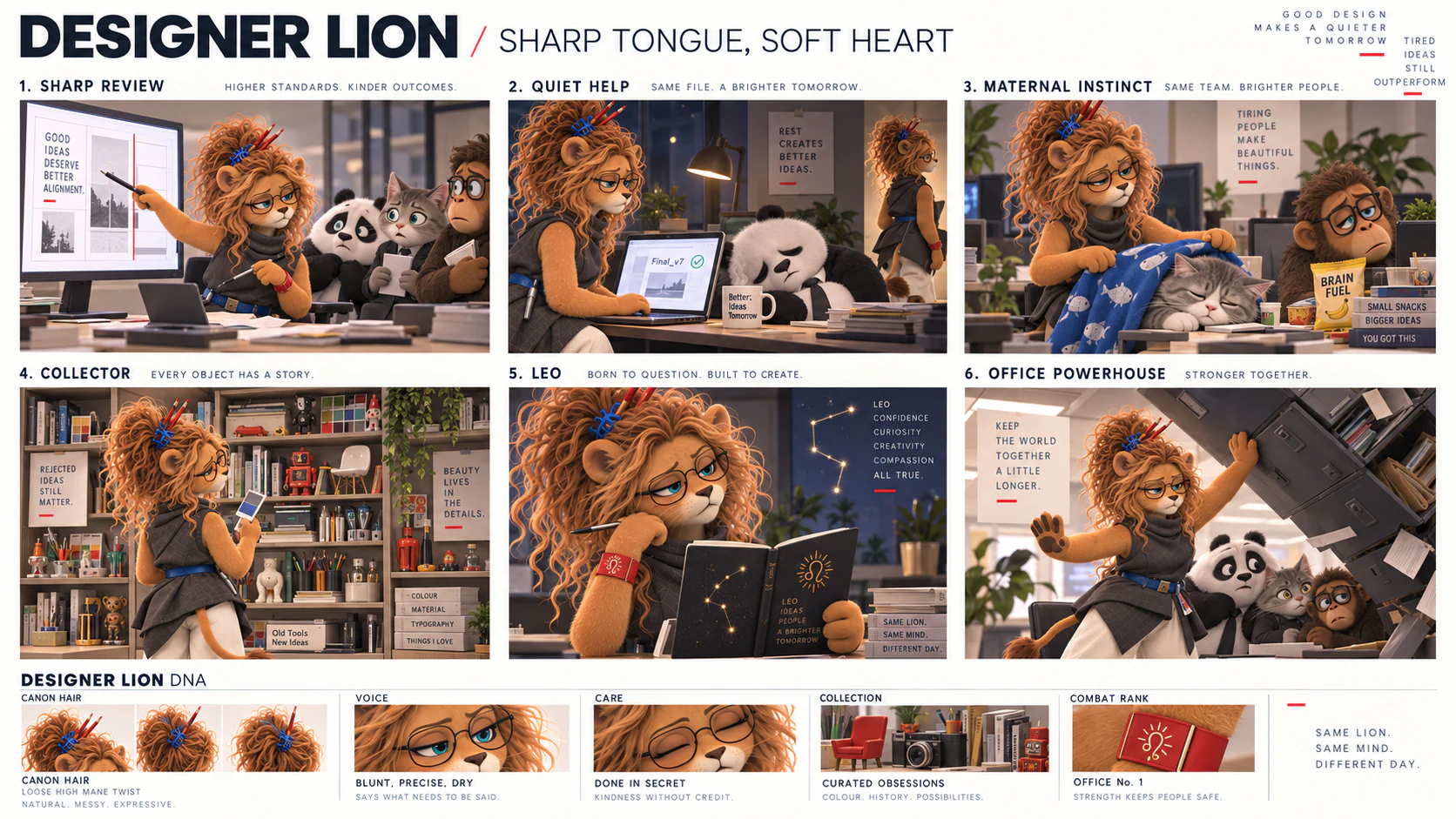
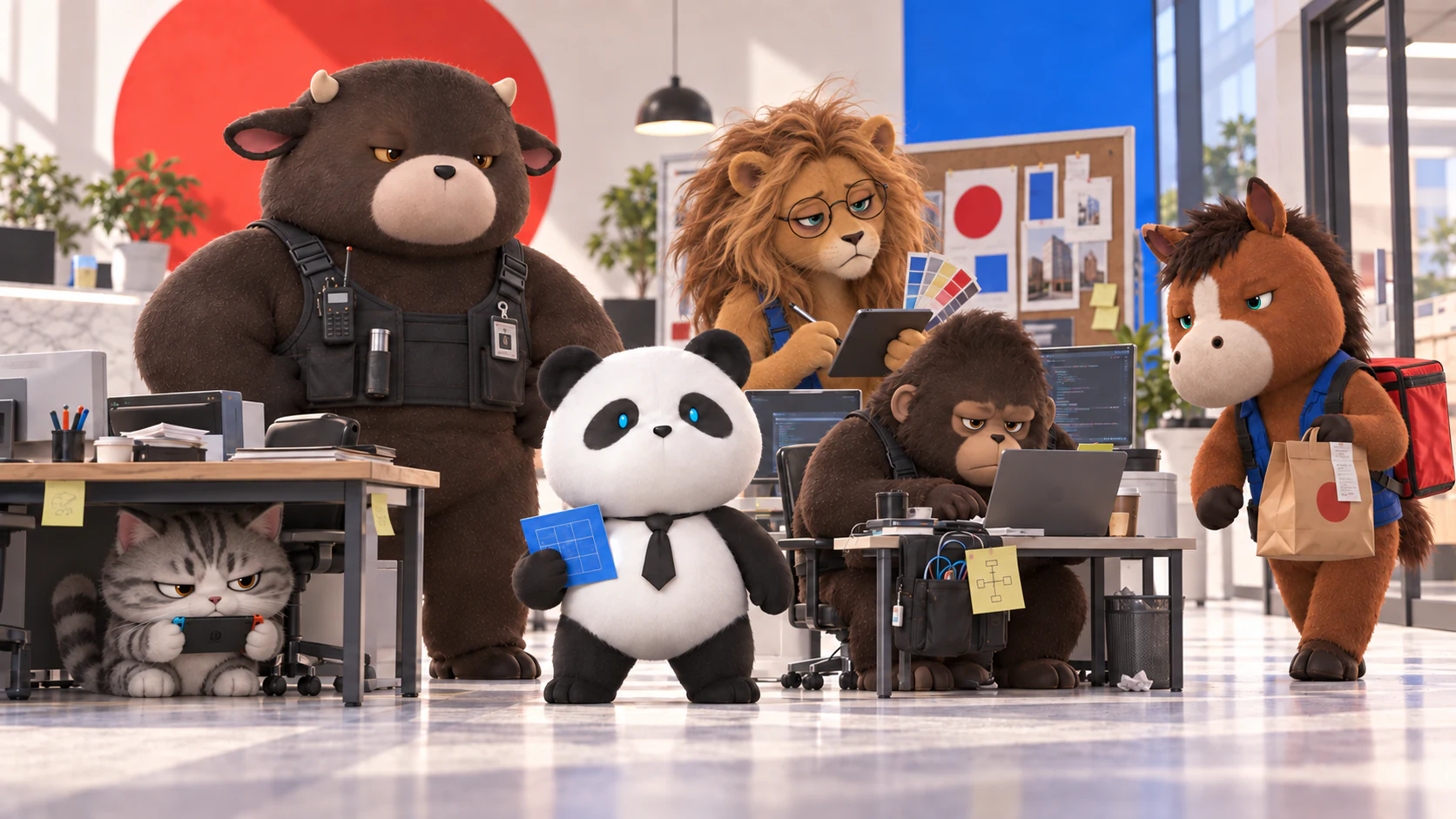
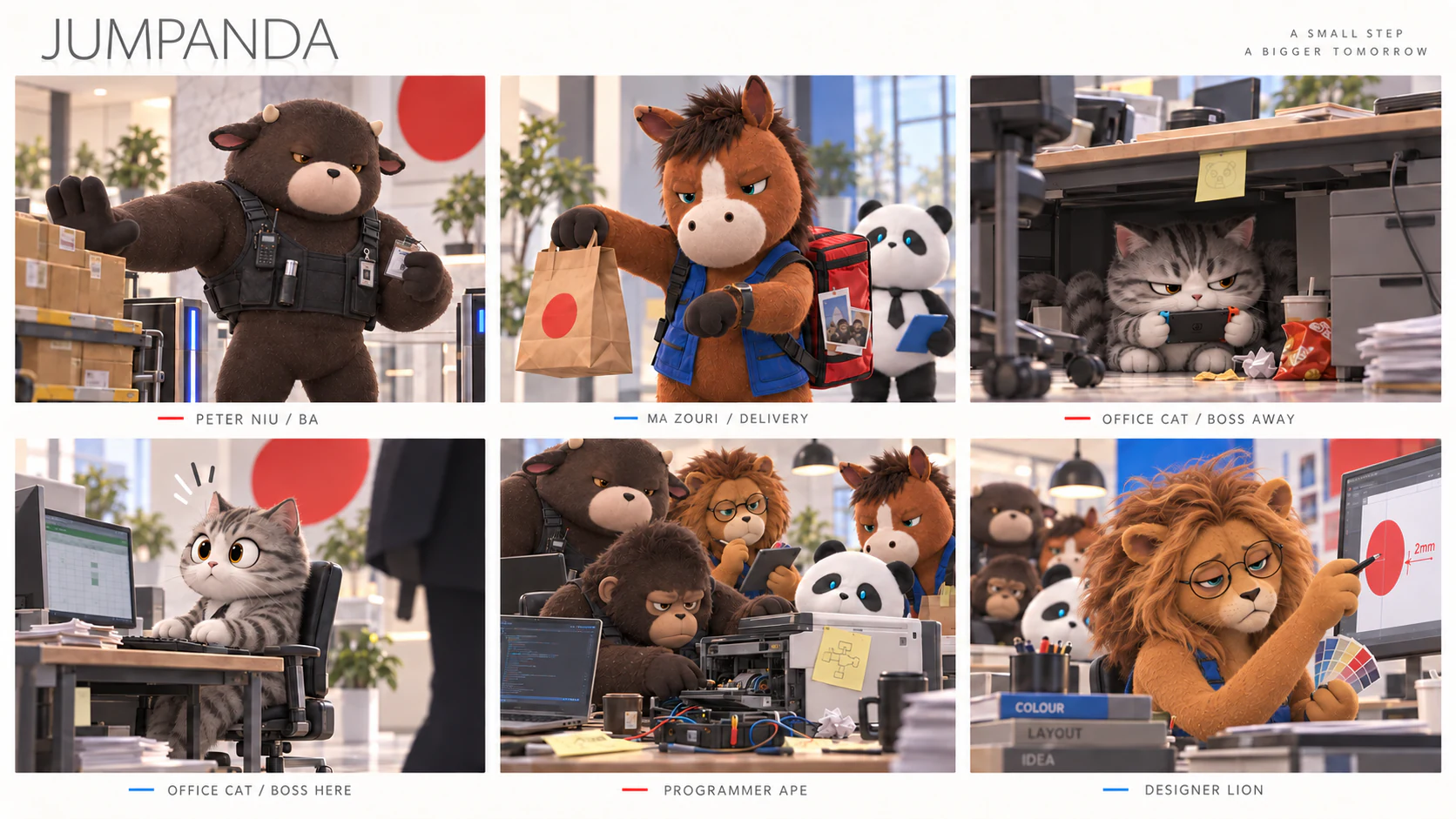
The Office Food Chain expands Jiang Panda's world into a recurring six-character workplace comedy. Peter Niu is the lobby BA — a towering, gym-built ox security guard who notices office politics before the office does. Ma Zouri is an impatient horse courier: his old street crew collapsed with the economy, so he now brings takeaway orders and a very short fuse through the front door. A grey tabby plays games under the desk and changes face the instant a manager appears. Programmer Ape fixes the systems everyone explains to him. Designer Lion is a beautiful, languid female lion whose messy mane and half-lidded eyes reveal chronic sleep loss; she still spots the two-millimetre error while everyone else waits. Professions read through action and one functional prop layer, keeping natural fur and compact Jumpanda proportions visible. Jiang Panda remains the quiet centre and the only character wearing a tie.
Designer Lion: Standards on No Sleep
This standalone character study gives Designer Lion a repeatable identity beyond the office group shot. Her canonical work look gathers the long mane into a failing high twist held by a cobalt clip and red drafting pencils; the loose waves become her overtime and day-off state. Her small feline muzzle, almond eyes and visible lion ears retain restrained catgirl-inspired appeal. She is a beautiful, proud, sharp-tongued female lion whose body is permanently one night behind her judgement. Her criticism is exact and intimidating, yet her kindness appears in secret: repairing a colleague's file, leaving food, covering somebody who fell asleep and holding up the cabinet before it reaches the team. A Leo with a carefully curated collecting habit, she keeps colour chips, design toys, rejected proofs, miniature chairs and obsolete tools. She is also the office's strongest physical presence, using that power to protect rather than dominate.