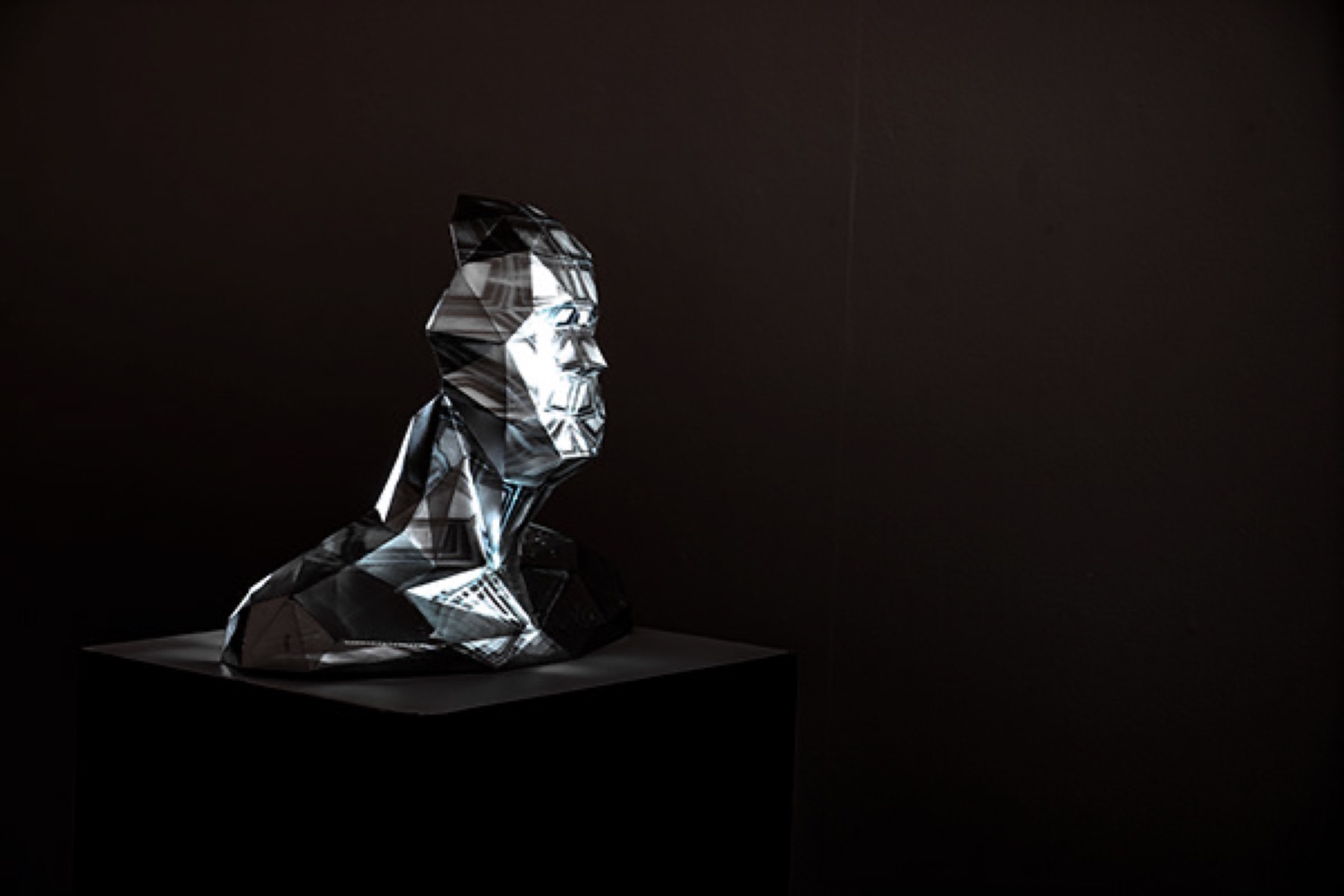
Archive of Many Faces
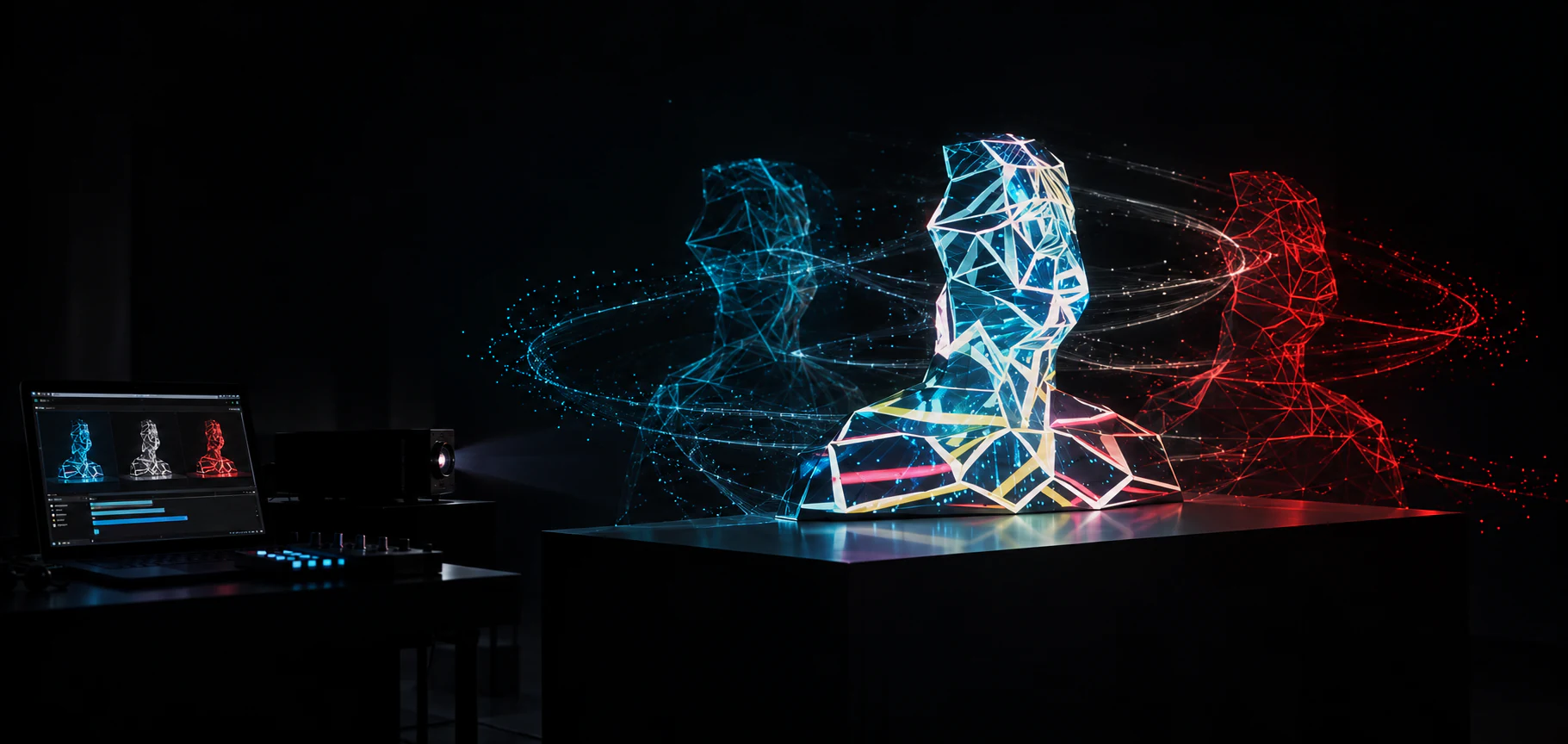
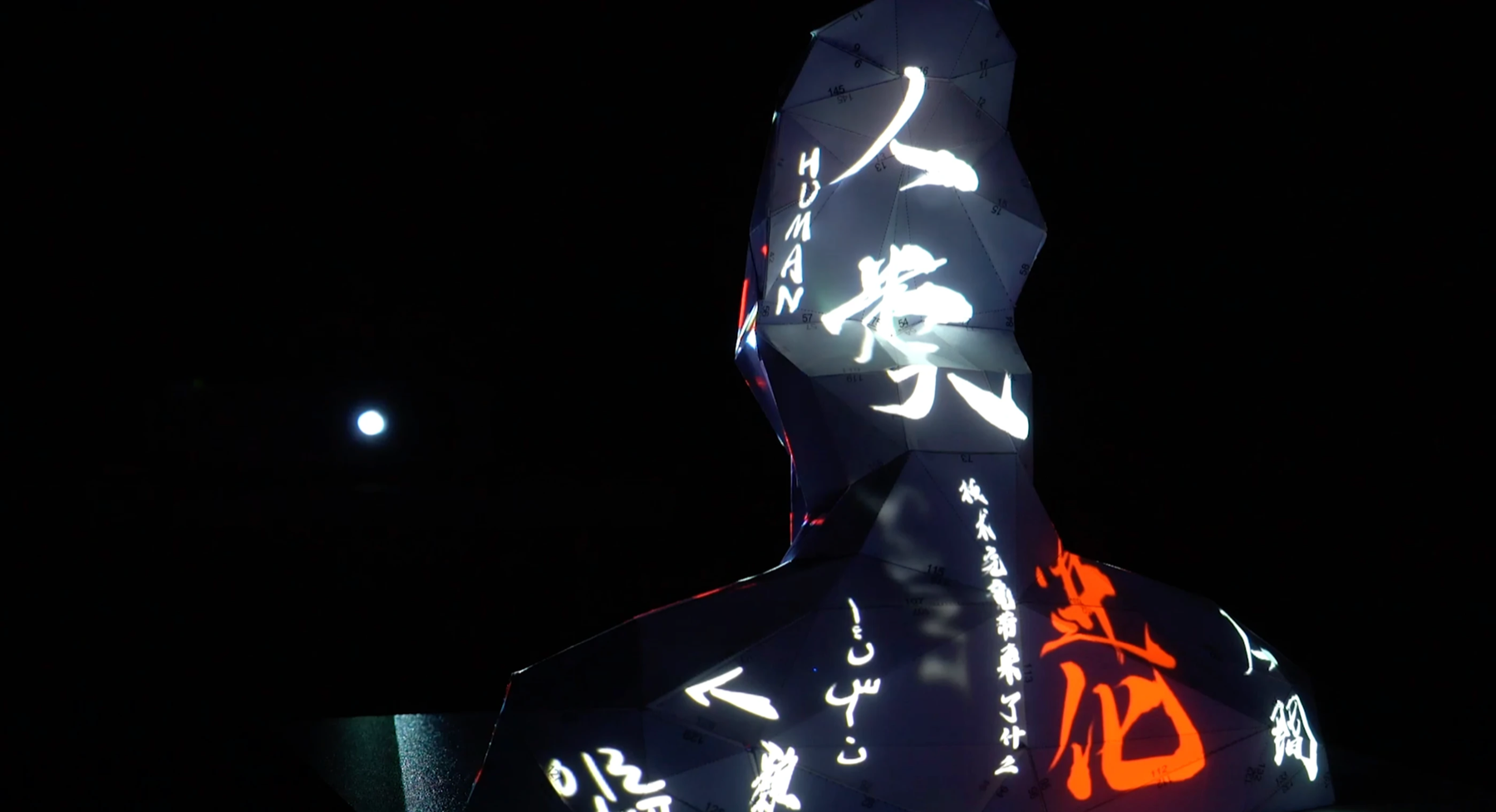
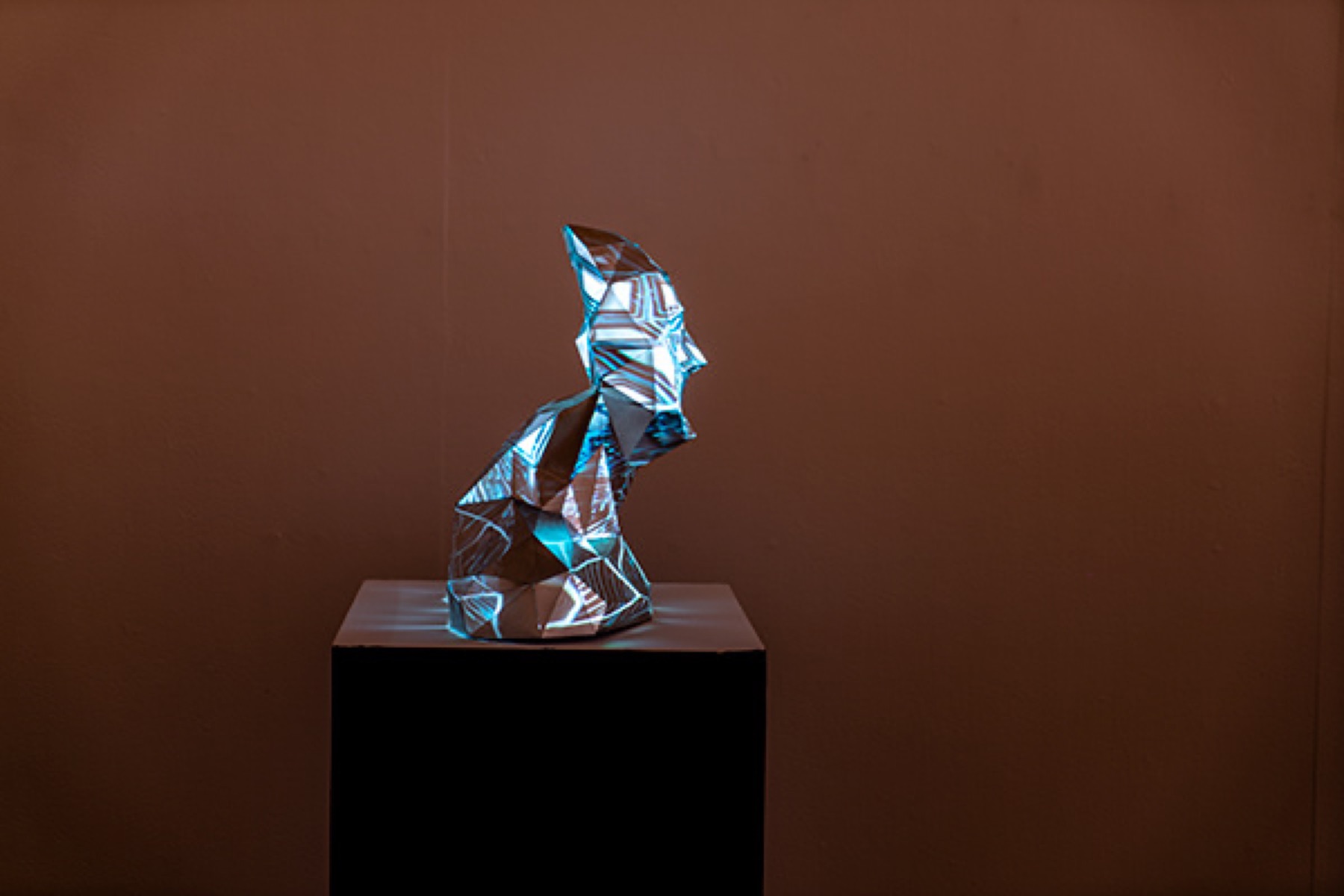
This independent installation study turns the mapped bust into a small archive of possible selves. Constellation points, gestural marks and facial topology occupy three related forms, each using the same projected geometry to speak in a different visual register. The repetition does not produce a crowd of identical characters; it makes the differences between surface, memory and perception visible. In the dark, a viewer is invited to move from one reading to another rather than search for a single definitive face.
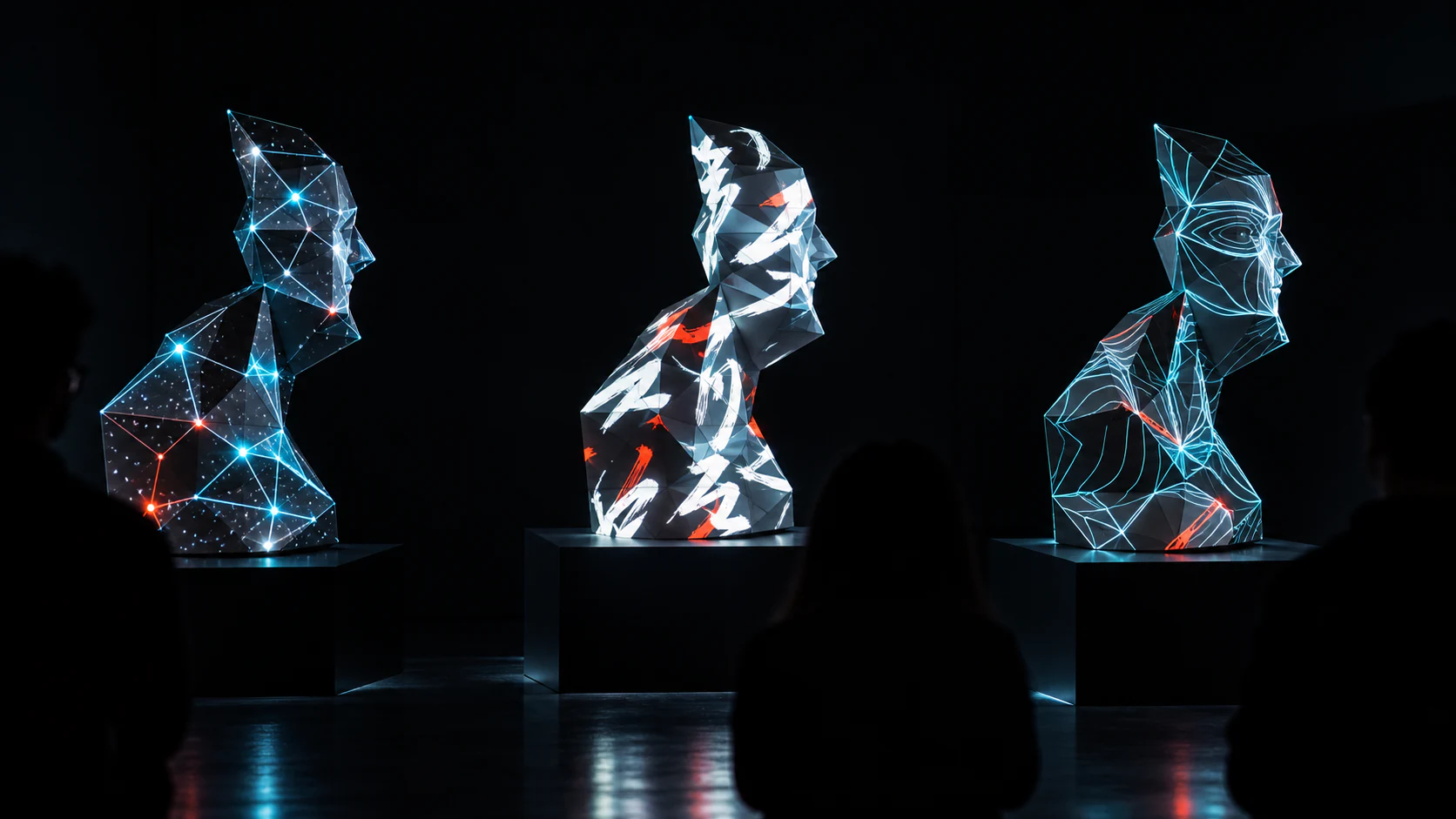
Breath Index
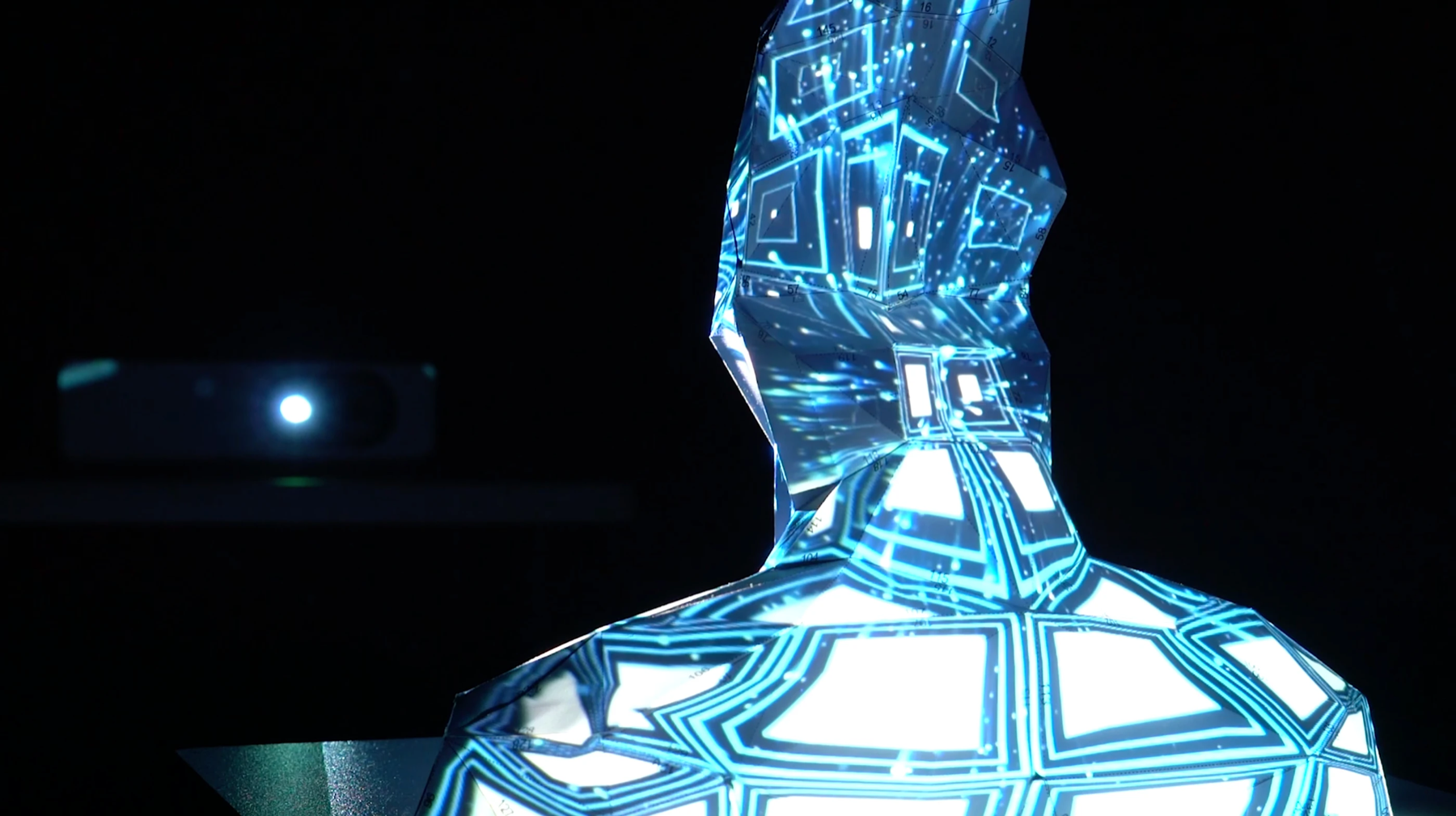
This independent moving-light study slows projection mapping down to the pace of breath. Contours travel across the faceted surface in long, low pulses, while mist allows the projector’s path to become part of the image. Cyan makes structure legible; occasional red interrupts it like warmth, stress or recall. The result is less an effect than an encounter with a body that seems to be thinking in light.
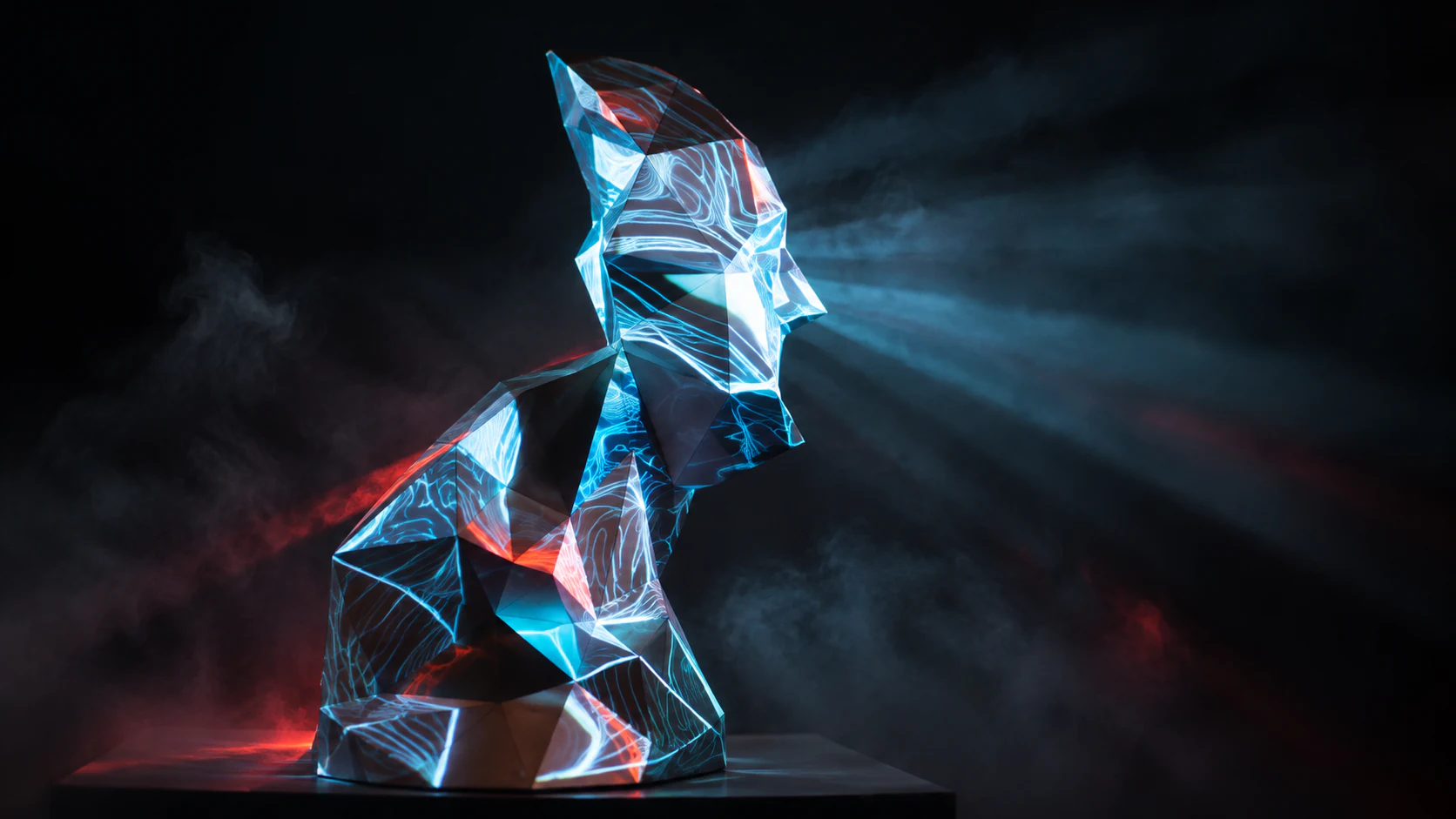
The Translation Table
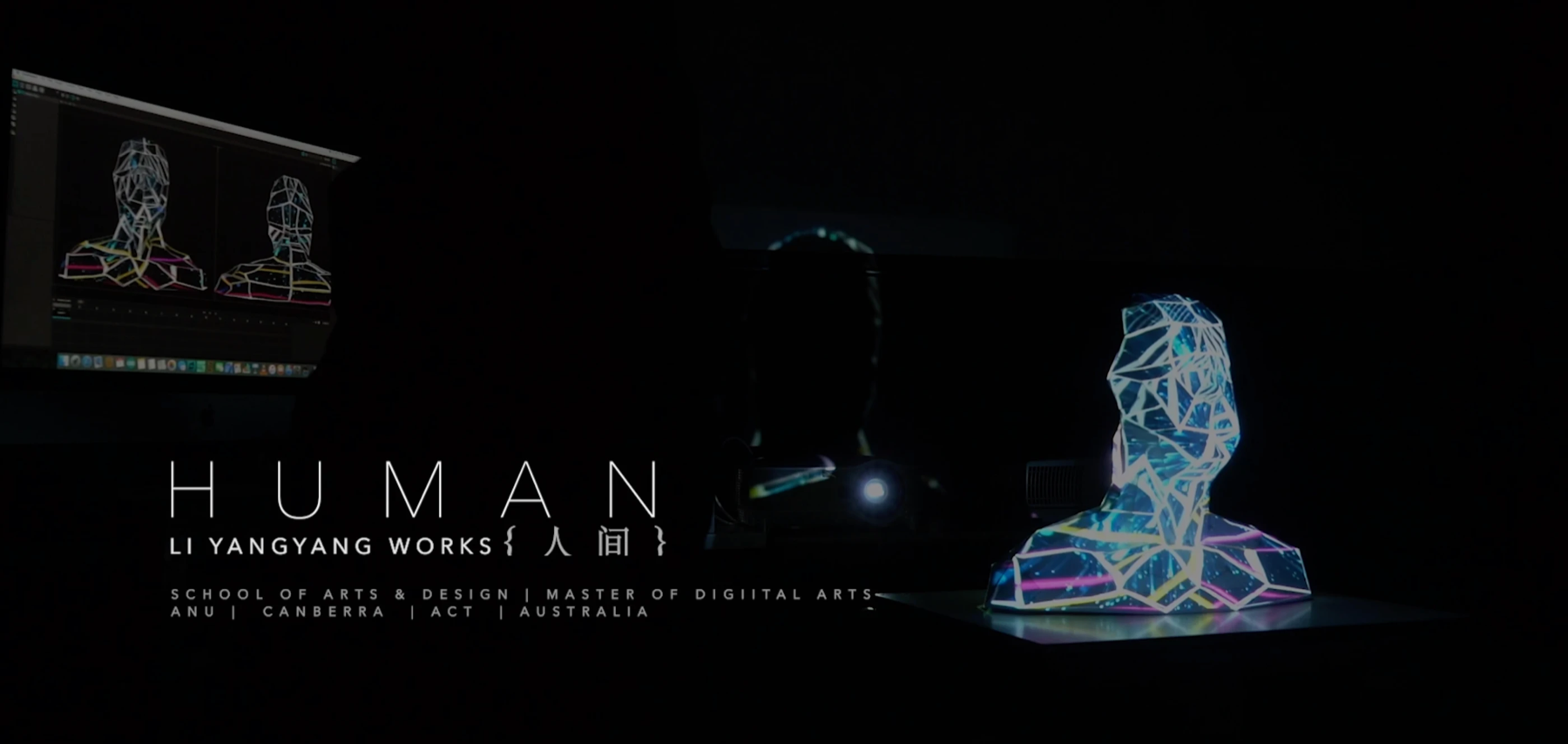
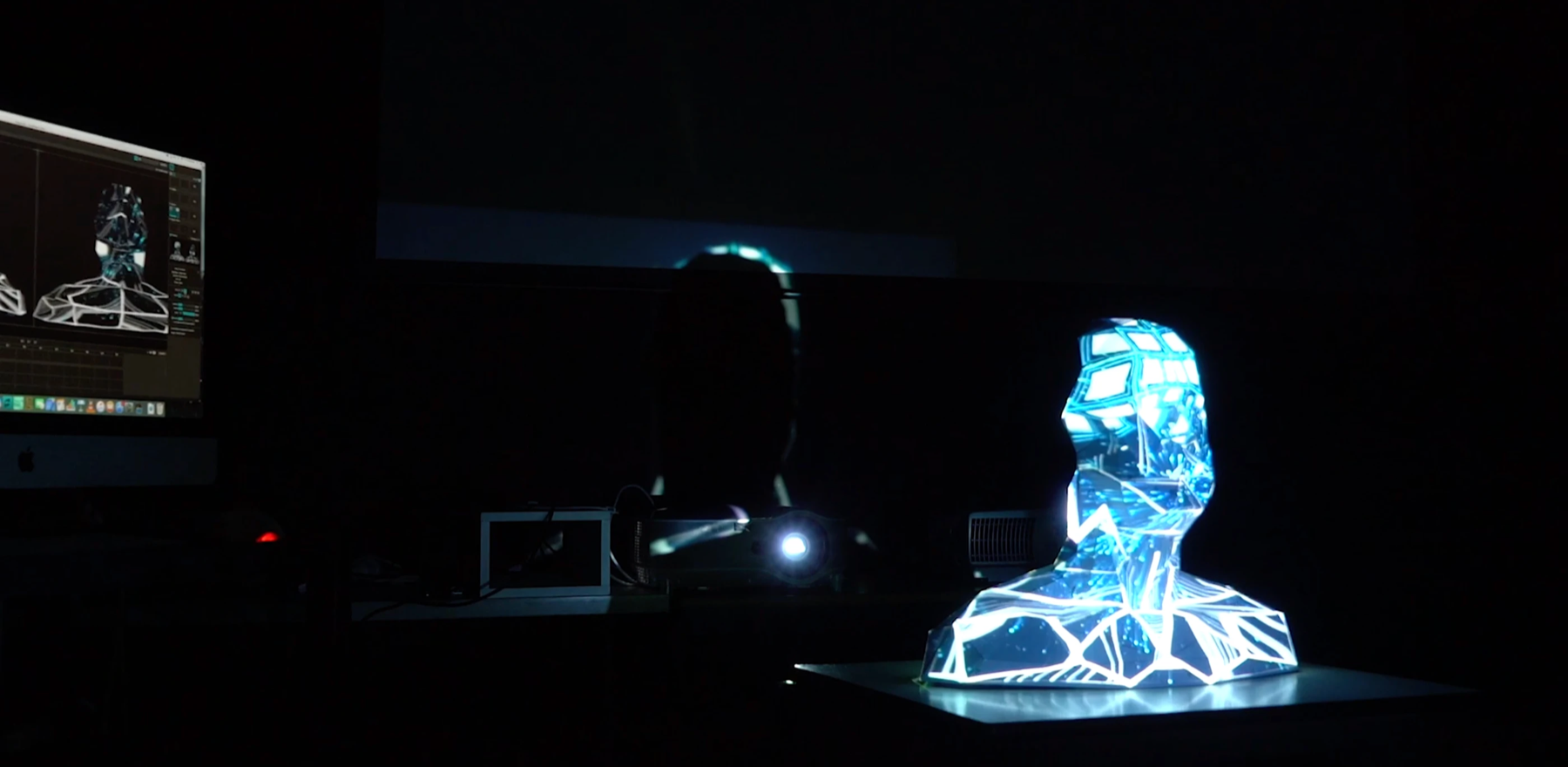
Projection mapping has a quiet craft behind its apparent magic. This independent process study records the calibration table: a physical maquette, hand-drawn mapping diagrams, tape, projector, wireframes and repeated tests. It makes the translation visible between a face as a volume, a face as a coordinate system and a face as a moving image. The machinery stays secondary; the real subject is the designer’s patient negotiation with a particular surface.
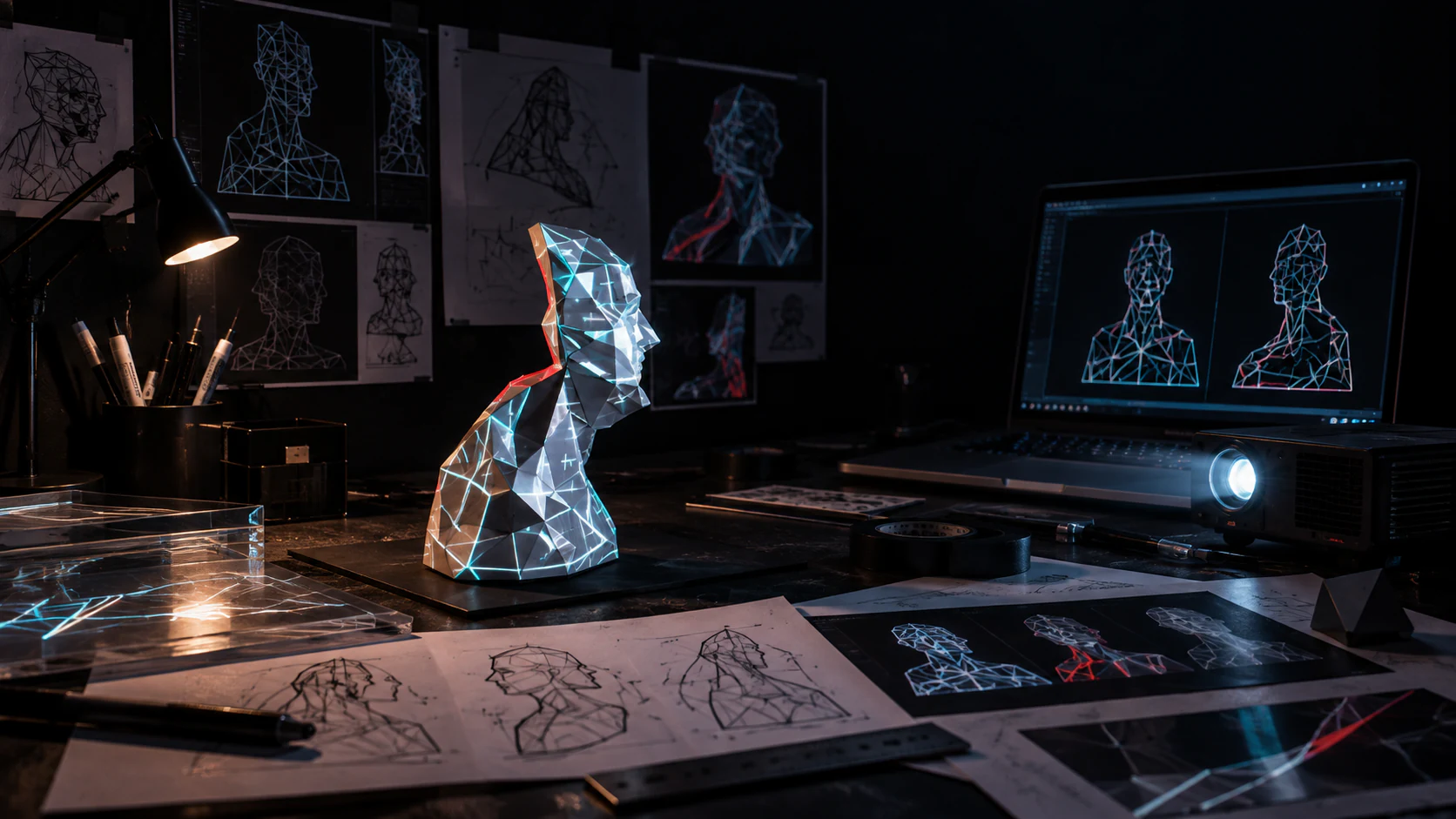
A Chorus of Surfaces

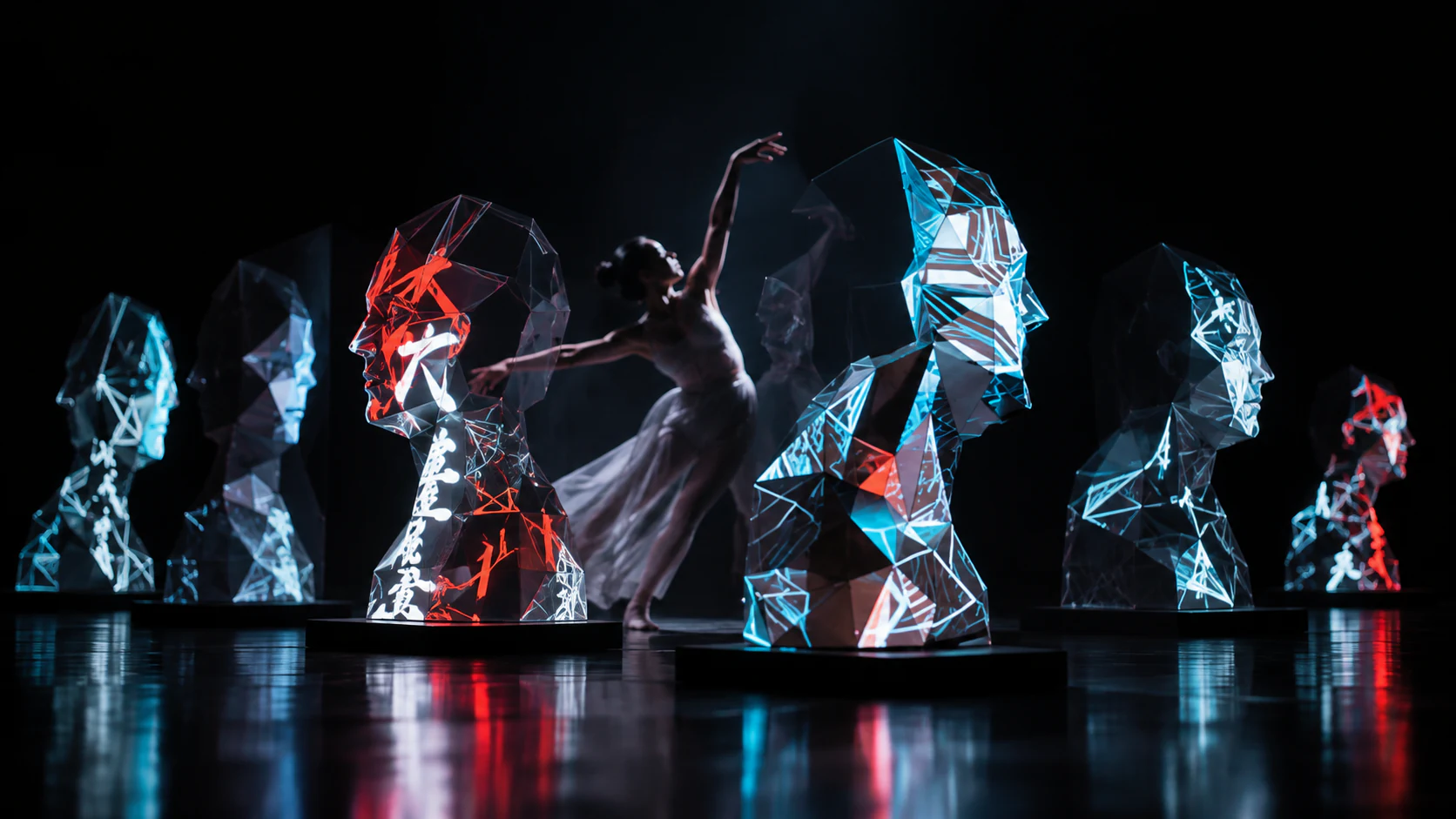
This independent performance study moves the projected figure from pedestal to stage. A dancer navigates a loose line of translucent heads, each receiving only fragments of the animation; meaning happens between gesture, reflection and partial faces. The visual language remains graphic and spare, but time becomes a compositional material. Instead of illustrating an idea of humanity, the scene lets identity arrive as a shifting agreement between body, image and viewpoint.
Still Frame / Moving Thought
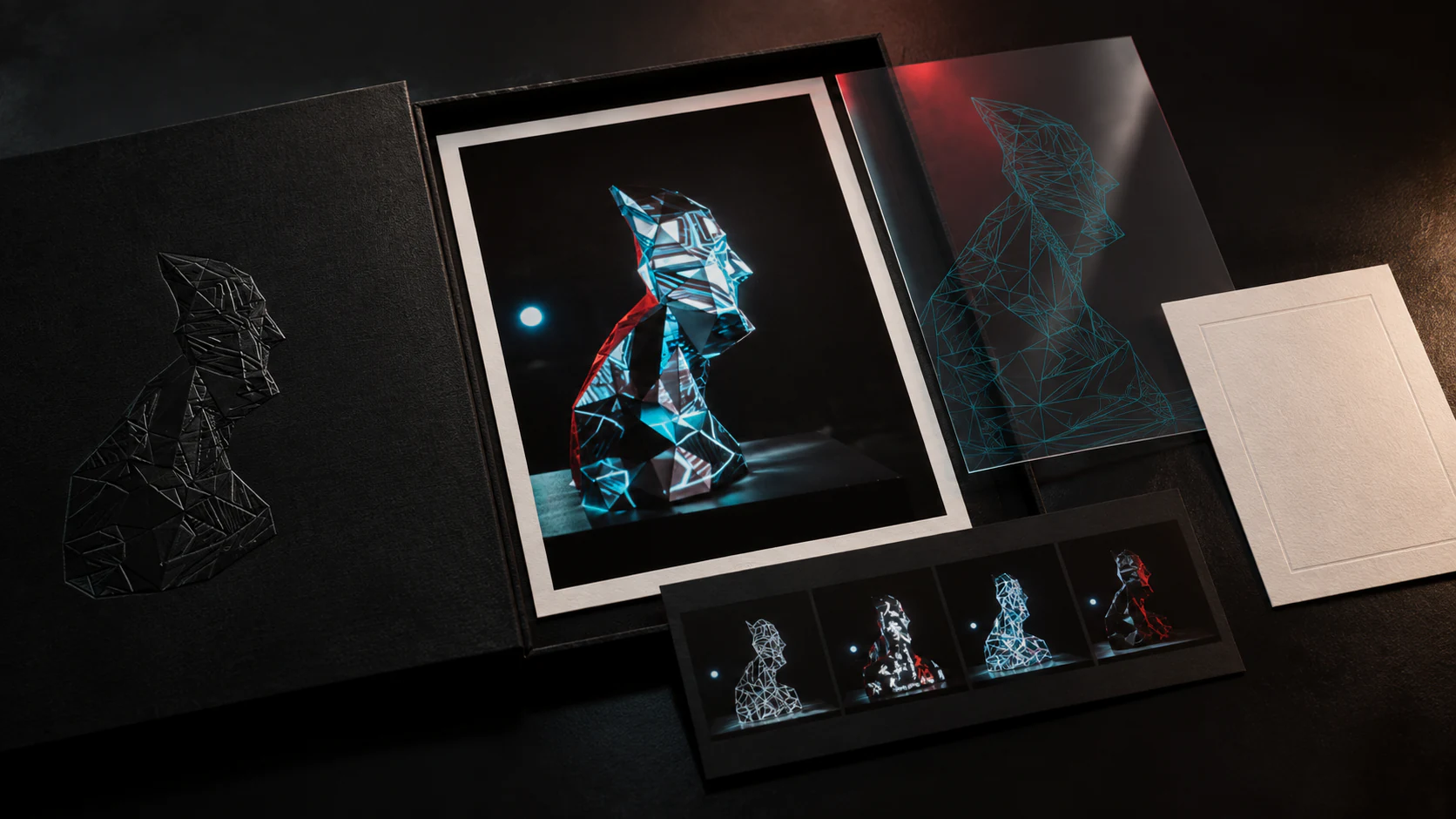
This independent art-edition study gives a time-based work a physical afterlife without pretending that a still can replace motion. A black folio contains a projection photograph, translucent geometry overlay, sequence card and an unfilled certificate. When the layers are shifted, the image changes only slightly, enough to recall the original act of projection. It is an archive made to be handled: dark, precise and attentive to the distance between a recorded frame and a live beam of light.
Memory in Three Passes
This independent motion study treats projection as a sequence of perception rather than a decorative skin. The figure moves through three visual states: recognition, fragmentation and afterimage. Light reveals the object, briefly argues with its volume, then leaves a residue in the viewer’s memory. The extension develops the original project’s dialogue between physical form and moving image.